Introduction Cutting fresh concrete before it fully cures can dramatically reduce the risk of random…
Introduction
Cutting fresh concrete before it fully cures can dramatically reduce the risk of random cracking. This is where early-entry diamond blades—also known as Soff-Cut blades—come into play. These blades are engineered to saw green concrete at its optimal stress point, usually within the first few hours after finishing. For professional contractors working on slabs, driveways, and industrial flooring, understanding how to choose and use early-entry blades correctly is key to achieving clean, controlled joints.
For concrete contractors, pouring the slab is only half the battle. The real challenge begins the moment the finishing process is complete. As concrete begins to cure and hydrate, internal thermal stresses build up rapidly. If you wait too long to cut your expansion joints, the slab will relieve that stress on its own, resulting in devastating, uncontrolled random cracking.
The industry-standard solution to prevent this is “Soff-Cutting” or early entry cutting. By using specialized early entry diamond blades, contractors can cut control joints while the concrete is still in its “green” (uncured) state. This practical guide covers the exact timing, equipment, and troubleshooting techniques you need to achieve a flawless, chip-free finish on your next pour.
This guide walks you through:
How early-entry cutting works
Which blades to select for different aggregates
The break-in procedure
Visual tips and tools for getting the best results
Learn more about industrial diamond blades at Johnson Tools.
What Are Early-Entry Diamond Blades?
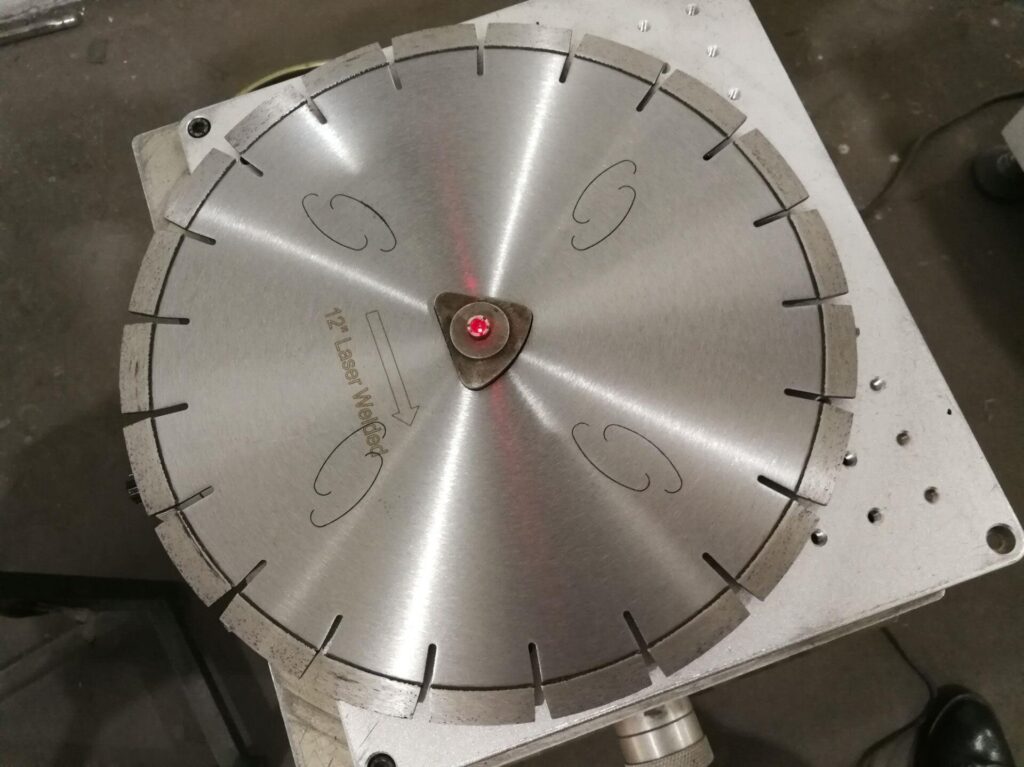
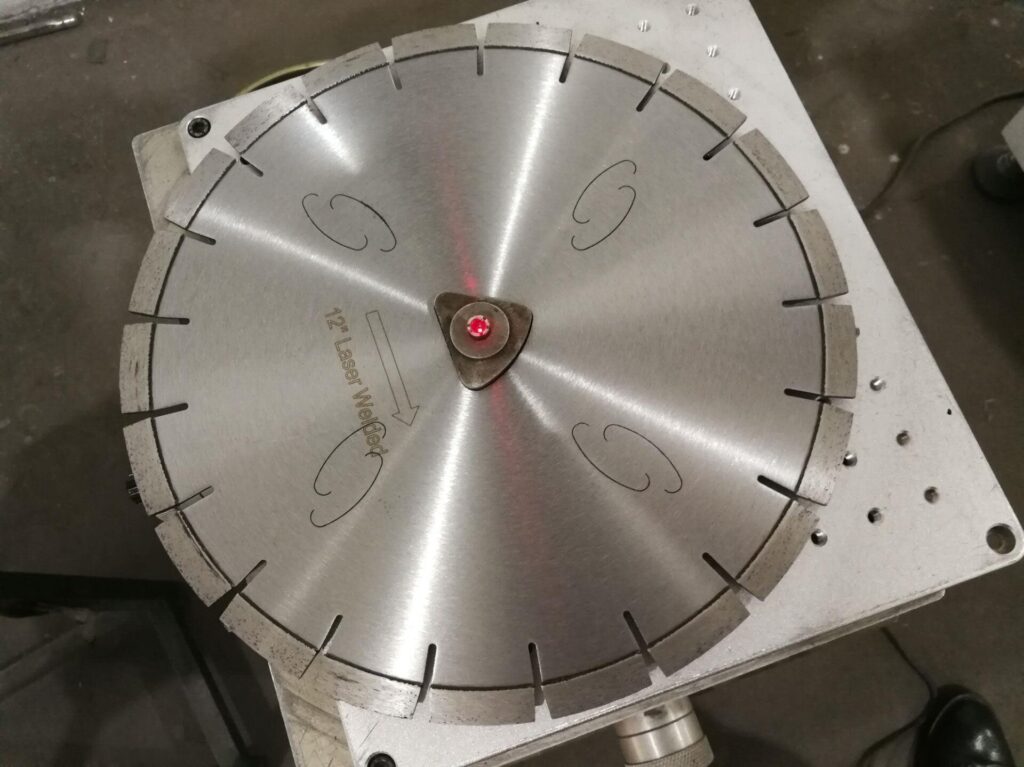
Early-entry blades are specialized diamond saw blades designed to cut concrete shortly after it has been poured—typically within 1–4 hours of finishing, before full curing sets in. Their unique feature is a triangular arbor that ensures compatibility with Soff-Cut saws, particularly those made by Husqvarna.
These blades:
Allow same-day sawing
Create narrow, controlled relief joints
Minimize uncontrolled cracking
Suggested Visual:
Infographic: Timeline of concrete curing vs. early-entry cutting window.
Timing is Everything: The “Green Zone” Cutting Window
Unlike traditional concrete cutting, which happens 24 hours or more after the pour, early entry cutting must happen within a very tight timeframe. The goal is to cut the slab when it is firm enough to support the weight of the saw and the operator, but before the internal stresses exceed the concrete’s tensile strength.
We call this critical window the “Green Zone.” Use the chart below to manage your cutting schedule on the job site:
Concrete Condition
Time After Finishing
Cutting Strategy
Expected Result
The “Green Zone”
1 – 2 Hours
Early Entry Blade + Skid Plate
Clean control joints, zero random cracking.
Initial Set
3 – 6 Hours
Standard Green Concrete Blade
Higher risk of edge spalling; abrasive dust increases.
Fully Cured
24+ Hours
Cured Concrete Saw Blade
Too late for stress relief; cracks may have already formed.
(Note: The exact timing can vary slightly depending on ambient temperature, humidity, and the specific concrete mix design.)
Why Use Early-Entry Blades?
When concrete begins to set, internal stresses build up due to shrinkage and hydration. If those stresses aren’t controlled with timely relief cuts, the slab may crack unpredictably. Early-entry blades are the ideal solution because they:
Cut during the critical curing phase
Prevent random cracking
Requires less power than cutting hardened concrete
Enable faster job completion
How to Select the Right Blade Based on Aggregate
The type of aggregate in the concrete significantly affects blade performance and wear. Here’s how to match your blade’s bond hardness to the aggregate:
Many novice operators make the mistake of focusing only on the early entry diamond blade while ignoring the most critical accessory: the skid plate.
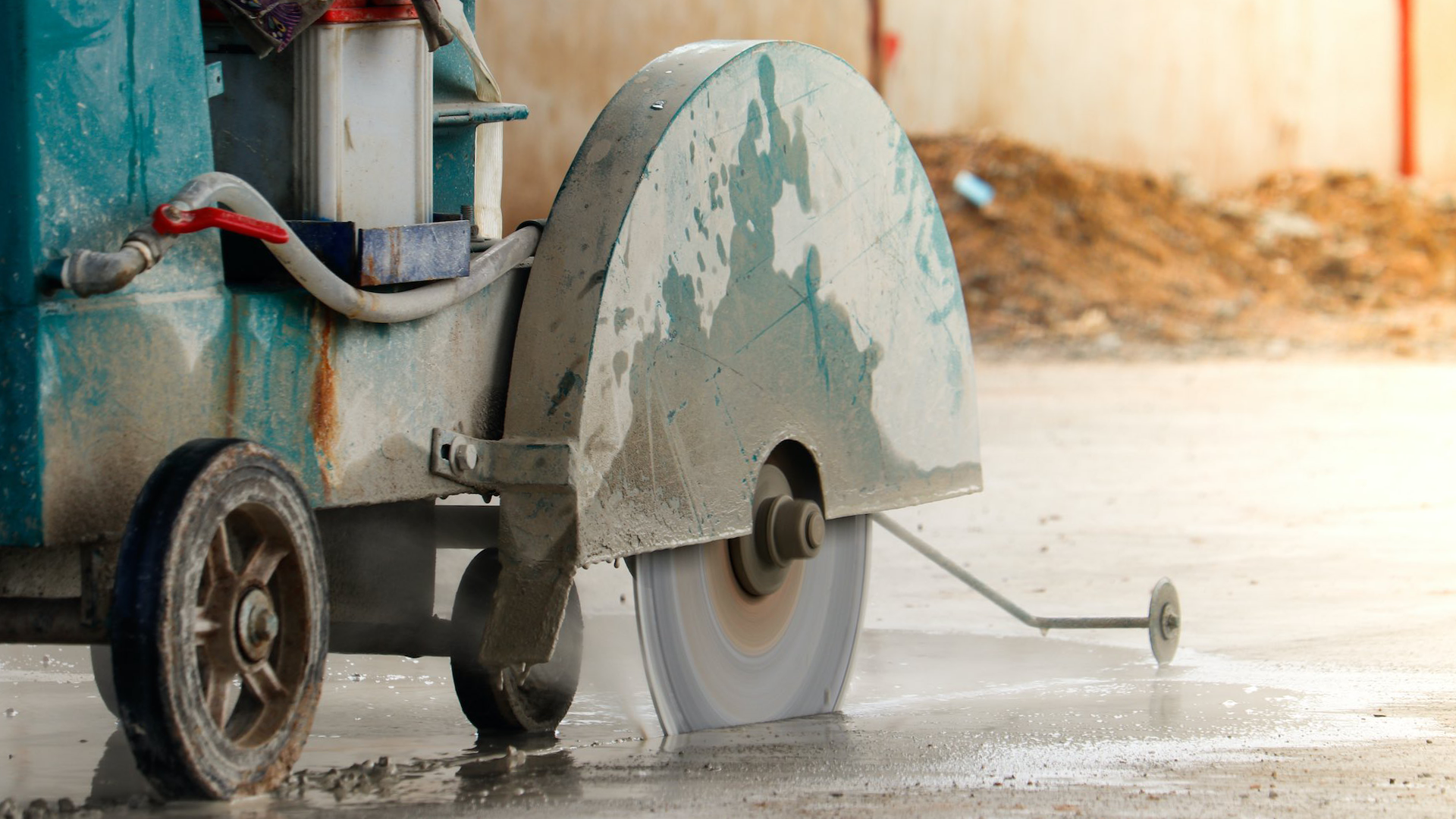
Because you are dry-cutting into a mixture of wet sand, cement, and loose aggregate, an exposed blade will naturally tear the edges of the joint. The skid plate surrounds the blade and applies firm, downward pressure on the surface of the green concrete. This holds the aggregate tightly in place while the laser-welded diamond segments slice through it, guaranteeing a sharp, clean, and chip-free edge.
Pro Tip: Always inspect your skid plate before a job. If the metal is worn thin or bent, replace it immediately, or you will experience edge spalling.
Equipment Compatibility: The Triangular Arbor
You cannot use a standard circular saw or a standard diamond blade for early entry cutting. Professional early-entry saws utilize a unique mounting system to prevent blade slippage and vibration during the cut.
When purchasing replacement blades, ensure they feature the special triangular safety arbor. This specific arbor design is required to fit perfectly onto industry-leading early-entry machines, such as the Husqvarna Soff-Cut® series (models 150, 2000, 4000, etc.). A perfect fit eliminates blade wobble, which is essential for protecting the fragile edges of green concrete.
Step-by-Step: Breaking In an Early-Entry Blade
To get maximum life and performance from your blade, always break it in properly before starting your full cuts.
Step 1: Install the Blade
Mount the diamond blade securely on your early-entry saw, checking that the triangular arbor is fully engaged.
Step 2: Low-Speed Run-In
Power up your saw at 50% of the normal RPM. Move forward for 15–30 feet over the green concrete. This slowly exposes the diamonds without damaging the segment.
Step 3: Full-Speed Operation
Increase to full RPM and begin cutting normally. The blade is now conditioned for optimal performance.
Visual Tip: Diagram showing blade segment exposure during break-in.
Application Tips for Early-Entry Cutting
When to Cut:
Begin as soon as the concrete can support the operator’s weight without leaving footprints or damage.
This is usually within 1 to 4 hours after finishing, depending on weather and mix.
Blade Depth:
Early-entry cuts are typically 1/3 of slab depth.
Example: For a 150mm slab, the cut should be around 50mm deep.
Cut Pattern:
Use a grid or joint plan to guide cuts. Cuts should be spaced 24x slab depth in inches (e.g., 12 ft for 6 in slab).
Visual Aid: Early-Entry Cutting Best Practices
Task
Good Practice
Avoid
Start Time
Walkable concrete, 2–4 hrs post-finishing
Waiting too long, >6 hrs
Blade Choice
Bond matched to aggregate type
Generic blade on all jobs
Break-In
50% RPM for 15–30 feet before full cutting
Skipping the break-in
Cut Depth & Spacing
1/3 slab thickness, 24x depth for spacing
Inconsistent depth or layout
Pro Tips from the Field
Test the concrete before cutting. Use a plastic footprint test: if the footprint barely marks the surface, it’s ready.
Mark your joints early. Layout joint lines before the slab sets, so your cuts are straight and aligned.
Use water spray if allowed. Light misting can help reduce dust without saturating the slab.
Clean cuts immediately. Remove slurry or debris before it hardens into the joint.
Conclusion
Using the right early-entry blade at the right time can make a huge difference in your concrete cutting outcomes. From choosing the proper bond to performing a correct break-in, every step plays a role in blade life and concrete integrity.
Contractors who consistently implement early-entry cutting:
Even with the best tools, job site conditions can be unpredictable. Here is how to troubleshoot common early-entry cutting issues:
Q1: Why is my early entry blade causing the concrete edges to spall (chip)?
A: Spalling is usually caused by one of three things:
Worn Skid Plate: The plate is no longer applying enough downward pressure.
Cutting Too Early: The concrete is too wet, and the aggregate is simply being pushed out of the way rather than cut. Wait another 15-30 minutes.
Worn Blade: The diamond segments are glazed or worn down.
Q2: Should I use water when cutting green concrete?
A: No. Early entry cutting is strictly a dry-cutting process. Adding water will create a thick mud that will clog the narrow U-slots of the blade, causing the engine to bog down and the blade core to overheat.
Q3: How deep should I cut my control joints?
A: The general rule of thumb for early entry cutting is a minimum depth of 1 inch (25mm), or up to 1/4 of the total slab thickness. This is deep enough to create a weak point that forces the concrete to crack cleanly below the cut line.
Suggested Images & Diagrams
Timeline Graph: Concrete curing vs. early-entry cutting window
Blade Selection Table: Aggregate type vs. bond hardness
Break-in Sequence Diagram: Low RPM → High RPM steps
On-site Photo: Operator using early-entry saw with PPE
Grid Layout Diagram: Proper spacing and depth visualized
Upgrade Your Job Site Efficiency: Johnson Tools Early Entry Diamond Blades
When the concrete is poured, the clock is ticking. You need a blade that performs flawlessly during the critical “Green Zone.” A failed blade means random cracking, ruined slabs, and costly callbacks.
Johnson Tools provides professional-grade Early Entry Diamond Blades specifically engineered to cut control joints cleanly before the concrete fully cures. Manufactured to meet rigorous international safety and quality standards, our blades deliver the reliability heavy-duty contractors demand.
Why Choose Our Early Entry System?
Seamless Machine Compatibility: Designed with the industry-standard Special Triangular Safety Arbor, our blades are fully compatible with major early-entry saws, including Husqvarna Soff-Cut® machines.
Anti-Spalling Skid Plates Included: We provide a matching, high-quality Skid Plate with our blades to guarantee a perfectly clean, chip-free finish on every joint.
Laser-Welded for Safety: Built with advanced Laser Welding technology, our segments withstand the abrasive nature of wet, uncured sand and aggregate without dropping teeth.
Optimized Debris Clearance: Featuring a Narrow U-Slot design, the blade efficiently clears heavy, damp slurry from the cut, preventing the blade from binding or overheating.
Technical Specifications for Professional Demands:
Available Blade Diameters: 6″, 8″, 10″, 12″, 13.5″, and 14″.
Segment Height & Value: 10mm / 12mm for extended cutting life.
Segment Thickness: Precisely scaled from 2.4mm (6″) up to 3.2mm (14″).
Quality Grade: Professional Grade (Customized colors and OEM branding available).
Protect your next concrete pour from random cracking. Contact Johnson Tools today to secure wholesale pricing on our complete early-entry blade and skid plate systems, and ensure your team has the right tools when the “Green Zone” window opens!
I am a representative of Johnson Tools, a graduate of Hunan University with a degree in Mechanical Engineering. With 20 years of dedicated experience in the diamond tools industry, I have consistently focused on driving technological innovation and optimizing products, striving to deliver high-quality tool solutions for our customers.
 Skip to main content Skip to footer