Skip to main content Skip to footer
When you think of diamond blades, words like “tough,” “precise,” and “durable” probably come to mind. But have you ever wondered what makes them so powerful? The secret lies in two key components: the diamond particles embedded in the blade, and the core material that supports them.
In this guide, we’ll break down the science behind these two materials in a friendly, easy-to-understand way—helping you better appreciate what’s behind every great cut, especially when it’s from Johnson Tools.
While the science behind diamond tools is complex, the goal for any contractor is simple: achieve the fastest cut with the lowest cost-per-foot. Understanding the relationship between the diamond segment bond and the steel core material is the secret to maximizing the lifespan of your tools. Whether you are slicing through abrasive asphalt or tackling heavy demolition, choosing the right core and bond formulation makes all the difference in performance and safety.
What Exactly is Diamond?

Diamond, also known as “industrial diamond” in the cutting tool industry, is a form of carbon arranged in a crystal structure. It’s the hardest naturally occurring material known to man.
Diamonds used in tools aren’t the same as gemstones. Instead, they are synthetically produced for optimal performance in cutting, grinding, or drilling.
💡 Fun Fact:
One carat equals 0.2 grams, but in tooling, we measure diamonds by micron size or mesh (grit size) depending on their usage.
The Core Foundation: High-Tension Steel and Safety Standards
The steel core is the backbone of any cutting tool. Using low-grade steel can lead to core warping, loss of tension, or catastrophic failure under high RPMs and extreme temperatures. Professional-grade tools rely on high-tension, heat-treated steel cores designed to withstand immense lateral pressure.
Safety is non-negotiable in heavy-duty construction. This is why top-tier manufacturers ensure their steel cores and welding processes strictly meet the EN 13236 safety standard. When cutting heavily reinforced concrete, utilizing a Laser Welded Diamond Wall Saw Blade guarantees that the segments remain securely attached to the core, providing maximum operator safety even during the most demanding industrial demolition tasks.
Matching Diamond Bonds to Cutting Materials
A common misconception is that a “harder” blade is always better. In reality, the bond (the metal matrix holding the diamonds) must be matched inversely to the material being cut.
Use this quick reference guide to select the right tool for your application:
| Cutting Material | Recommended Diamond Bond | Core Technology Needed | Best Application |
| Heavily Reinforced Concrete | Soft Bond (Exposes new diamonds faster) | High-Tension Steel Core | Laser Welded Diamond Wall Saw Blade |
| Abrasive Asphalt & Green Concrete | Hard Bond (Resists rapid abrasion) | Drop-Segment Core (Prevents undercutting) | Highway expansion joints & road repair |
| Porcelain & Ceramic | Medium/Soft Bond | Sandwich Silent Core | Indoor precision tile cutting without chipping |
Choosing the Right Diamond Grit & Strength
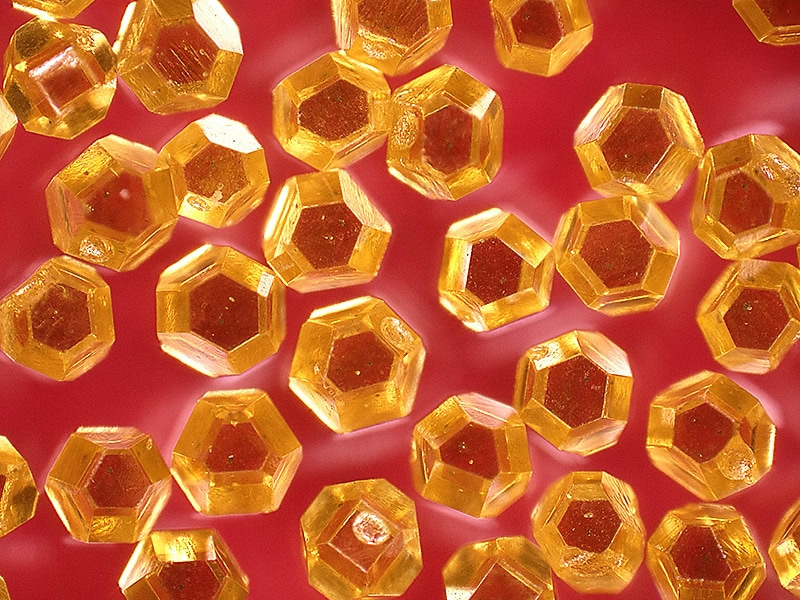
Not all diamond particles are equal. Two key aspects affect tool performance:
- Grit Size: Refers to how fine or coarse the diamond particles are.
- Coarser grits = faster cutting
- Finer grits = smoother finish
- Diamond Strength: This determines how easily a crystal will fracture.
- Too strong? It becomes dull.
- Too weak? It breaks easily.
💡 For general cutting blades, the ideal strength falls between 130–140N.
What is a Blade Core?
The core is the steel body that holds diamond segments. It affects vibration, precision, and durability.

There are two common types of blade cores:
| Welding Type | Typical Core Materials | Usage |
|---|---|---|
| Laser Welded | 30CrMo, 50Mn2V | Heavy-duty concrete cutting |
| Silver Brazed | 75Cr1, 65Mn | Tile, ceramics, dry cutting |
Blades made by Johnson Tools use high-performance materials for each welding method, ensuring the right balance of flexibility and rigidity.
Real-World Examples
- Laser-welded blades with 50Mn2V cores are widely used in road construction for cutting reinforced concrete.
- Silver Brazed Blades with 75Cr1 are ideal for cutting tiles or granite in interior decoration.
These material combinations ensure optimal results across applications.
Visual Learning Tip: 🔍
Consider using a simple infographic showing:
- Cross-section of a diamond segment
- Stress points on a blade during cutting
- Core materials and their welding types
This helps in grasping technical differences more intuitively.
Conclusion
Understanding diamond grit, strength, and core materials gives you a deeper appreciation of your blade’s engineering. Whether you’re a distributor or an end user, choosing the right materials ensures better performance and safety.
Ready to upgrade your cutting tools? Visit Johnson Tools or contact our experts for tailored advice and premium solutions.
Frequently Asked Questions (FAQ) About Blade Cores
Q1: Why does my diamond blade core turn blue or warp during a cut?
A: A blue or warped core is a clear sign of extreme heat buildup. This usually occurs when using a hard-bond blade on very hard materials (like granite), or when dry cutting in an application that requires constant water flow. Upgrading to a premium core with laser-welded segments ensures better heat dissipation and structural integrity.
Q2: What is a “Silent Core” diamond blade, and when should I use it?
A: A silent core features a specialized “sandwich” design—two layers of high-strength steel with a sound-dampening copper or polymer material in between. It reduces whistling and vibration noise by up to 15 decibels, making it the perfect choice for indoor renovations or urban construction zones where noise pollution is strictly regulated.
Q3: How does laser welding improve the core’s performance?
A: Laser welding creates a metallurgical bond between the diamond segment and the steel core that is often stronger than the segment itself. This prevents teeth from flying off when cutting through tough steel rebar, ensuring maximum safety and uninterrupted cutting.
Elevate Your Cutting Efficiency with Johnson Tools
Understanding the science behind the blade is the first step to optimizing your cutting operations. Choosing the right combination of high-tension steel and precision-formulated diamond segments will dramatically lower your tool replacement costs.
To see how these advanced materials are applied in our latest manufacturing processes and to stay updated on industry innovations, check out the updates in our News section.
[INQUIRE NOW] — Need help selecting the perfect tool? Contact the Johnson Tools engineering team today to find the exact formulation and core design for your next heavy-duty project.
Related Product Recommendations
- Laser Welded Diamond Wall Saw Blades: Maximum safety and segment retention for deep cuts in heavily reinforced concrete.
- Early Entry Concrete Saw Blades: Featuring specialized triangular arbors to prevent random cracking in green concrete.
- Concrete Cutting Discs: High-speed, high-torque blades optimized for demolition, road maintenance, and bridge decks. Ready to elevate your heavy-duty construction efficiency? Contact Johnson Tools today for factory-direct OEM/ODM superabrasive solutions—secure your testing samples, engineering support, and exclusive wholesale pricing now!
Private Label Diamond Tools: Laser Marking & Custom Design Solutions