Skip to main content Skip to footer

Cutting concrete is an essential task for many construction projects, whether you’re working on a renovation or building a new structure. To achieve clean and accurate cuts, using the right tools is crucial. One of the most effective tools for concrete cutting is a concrete saw.
Types of Concrete Saws and Recommended Diamond Blades
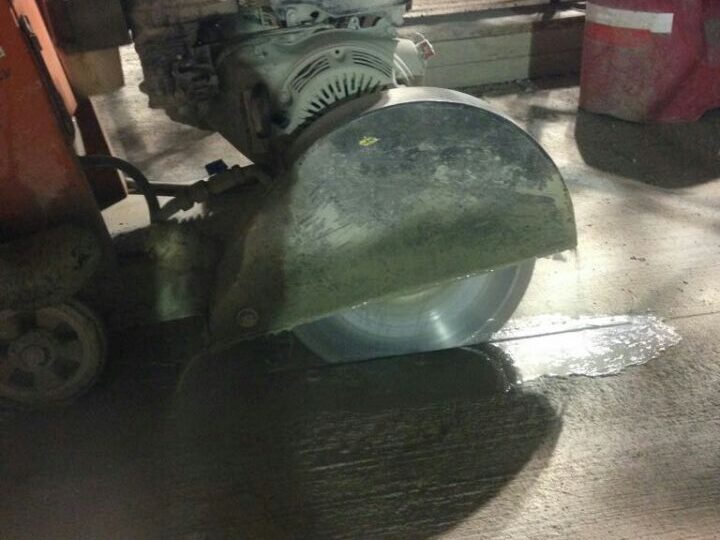
Concrete saws are available in different designs, and each machine requires the right diamond saw blade to achieve efficient cutting, stable performance, and longer blade life.
As a professional diamond blade supplier, we recommend selecting the saw and blade together rather than choosing the blade only by diameter. The correct blade depends on several factors, including the saw type, cutting depth, concrete hardness, reinforcement level, wet or dry cutting conditions, and required cutting speed.
Below are the most common types of concrete saws and the diamond blades typically used with them.
1. Handheld Concrete Saw
A handheld concrete saw is commonly used for portable concrete cutting, repair work, and areas where larger machines cannot operate easily.
Typical applications include:
- Concrete blocks
- Curbs
- Small concrete slabs
- Wall trimming
- Door and window openings
- Repair and renovation work
For handheld saws, segmented diamond blades and turbo diamond blades are commonly used because they provide fast cutting and efficient debris removal.
For dry cutting applications, the blade should be designed with good heat dissipation. For wet cutting, water helps cool the segments and can improve blade life.
When cutting reinforced concrete, we recommend using a professional laser-welded diamond blade for concrete and rebar rather than a general-purpose masonry blade.
Recommended blade types:
- Segmented diamond blade for concrete
- Turbo diamond blade for faster cutting
- Laser-welded blade for reinforced concrete
- Dry cutting diamond blade
- Wet cutting concrete blade
2. Walk-Behind Concrete Saw
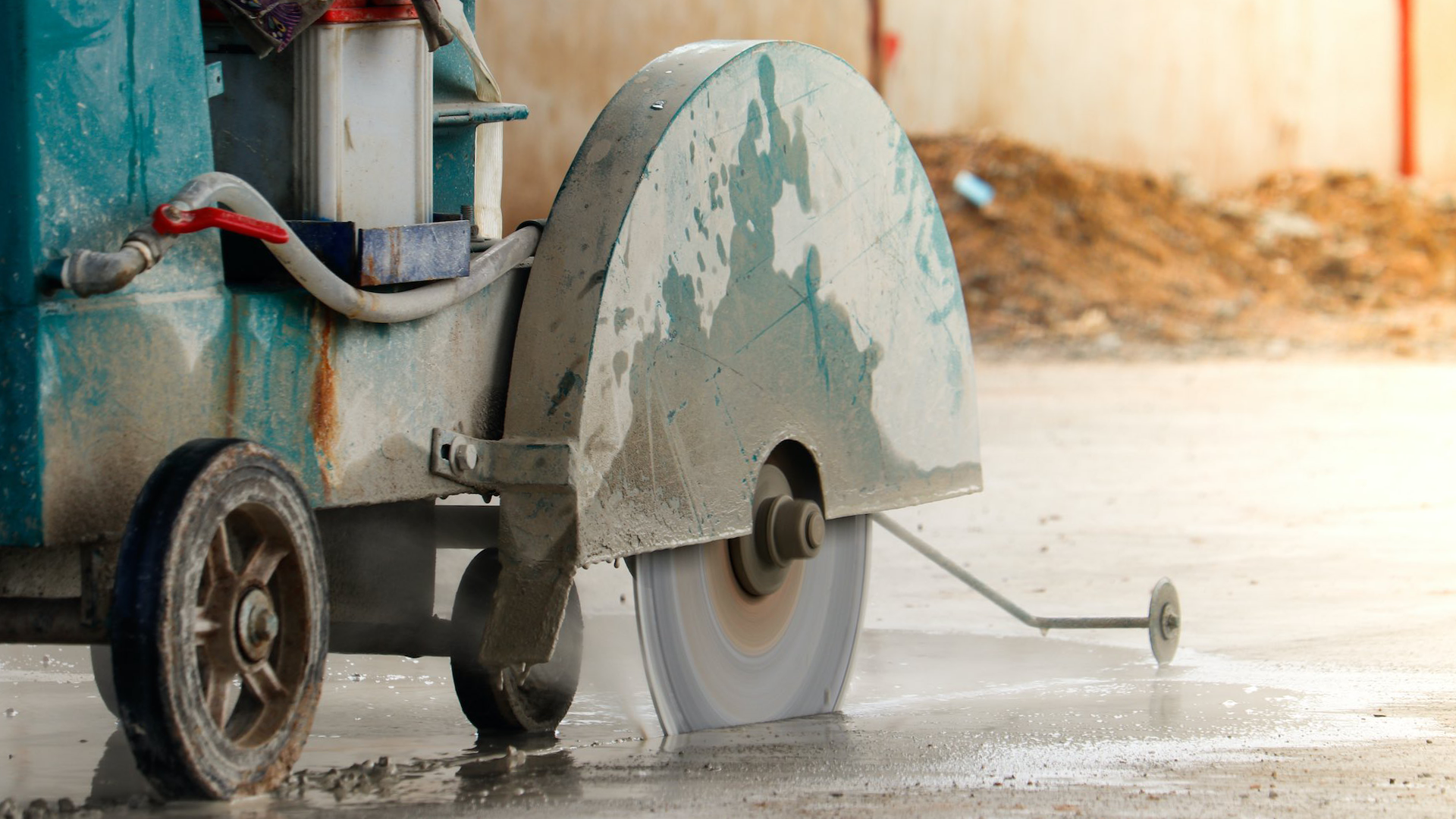
A walk-behind concrete saw, also called a floor saw or road saw, is designed for long, straight, and relatively deep cuts in horizontal surfaces.
It is widely used for:
- Concrete slabs
- Industrial floors
- Roads
- Pavement
- Expansion joints
- Utility trenches
- Infrastructure projects
Walk-behind saws normally use larger-diameter diamond blades and require blades with strong segment bonding and stable cutting performance.
For cured concrete, a diamond blade with a segment formula matched to the concrete hardness and aggregate is important.
For reinforced concrete, the blade must also handle embedded steel without excessive segment wear.
For green concrete or highly abrasive materials, a harder bond is generally preferred to reduce premature segment wear.
Recommended blade types:
- Laser-welded concrete saw blade
- Reinforced concrete diamond blade
- High-horsepower floor saw blade
- Road cutting diamond blade
- Green concrete saw blade
For professional floor sawing, blade specification should be selected according to the saw horsepower, blade diameter, arbor size, cutting depth, aggregate hardness, and reinforcement level.
3. Flat Saw
A flat saw is specifically designed for cutting horizontal concrete surfaces such as slabs, floors, bridge decks, and pavement.
Common applications include:
- Concrete slab cutting
- Floor openings
- Expansion and control joints
- Pavement repair
- Utility installation
- Damaged concrete removal
Flat saws typically use large-diameter diamond concrete blades for deeper and more continuous cutting.
As a diamond blade manufacturer, we normally recommend different segment bonds depending on the material.
For hard cured concrete, a relatively softer bond can help expose fresh diamond particles more efficiently.
For softer or more abrasive concrete, a harder bond can reduce excessive segment wear.
Recommended blade types:
- Diamond blade for cured concrete
- Reinforced concrete saw blade
- High-speed floor saw blade
- Large-diameter laser-welded blade
- Wet cutting concrete blade
Matching the correct diamond segment formula to the concrete and machine is especially important for large-diameter floor saw blades.
4. Wall Saw
A wall saw is used for precise vertical or inclined cuts in thick concrete walls and reinforced concrete structures.
Typical applications include:
- Door openings
- Window openings
- Ventilation openings
- Structural modification
- Reinforced concrete walls
- Demolition work
Professional wall saws generally operate with larger diamond blades and track-mounted systems.
Because wall cutting often involves thick and heavily reinforced concrete, the blade must offer strong segment retention, accurate cutting, and stable performance under high loads.
For these applications, laser-welded diamond wall saw blades are commonly recommended.
Recommended blade types:
- Wall saw diamond blade
- Reinforced concrete wall saw blade
- Laser-welded concrete blade
- Wet cutting wall saw blade
- High-power diamond blade for rebar
Segment height, diamond concentration, bond formulation, and welding quality all affect wall saw blade performance.
5. Early-Entry Concrete Saw
An early-entry concrete saw is used to cut control joints in freshly poured concrete before random cracking begins.
This process is commonly known as green concrete cutting.
Typical applications include:
- Fresh concrete slabs
- Industrial floors
- Warehouses
- Parking lots
- Concrete pavements
- Control joints
Green concrete is softer but highly abrasive, so the diamond blade requires a different bond compared with a blade for cured concrete.
A harder bond is often used to slow segment wear in abrasive green concrete.
Many early-entry systems also use a skid plate to help reduce chipping and spalling along the joint.
Recommended blade types:
- Green concrete diamond blade
- Early-entry saw blade
- Soff-cut style blade
- Control joint blade
- Diamond blade with skid plate
For this type of application, blade thickness and cutting timing are especially important because the purpose is not only cutting but also controlling concrete cracking.
6. Ring Saw and Concrete Chainsaw
A ring saw or concrete chainsaw is often selected when deeper or more complex cuts are required.
These tools are commonly used for:
- Deep wall cuts
- Tight corners
- Structural openings
- Pipe penetrations
- Reinforced concrete cutting
- Door and window openings
Ring saws can achieve deeper cuts than conventional handheld circular saws, while concrete chainsaws are useful for square corners and irregular openings.
Ring saws require specialized diamond ring saw blades, while concrete chainsaws use diamond chains rather than conventional circular blades.
For reinforced concrete, the diamond cutting elements must be specifically designed to handle both hard aggregate and embedded steel.
Quick Guide: Concrete Saw and Diamond Blade Selection
| Concrete Saw Type | Recommended Diamond Blade | Typical Application |
|---|---|---|
| Handheld Concrete Saw | Segmented / Turbo Diamond Blade | Blocks, curbs, small slabs |
| Walk-Behind Saw | Laser-Welded Floor Saw Blade | Roads, floors, pavements |
| Flat Saw | Large-Diameter Concrete Blade | Slabs, joints, utility cuts |
| Wall Saw | Reinforced Concrete Wall Saw Blade | Walls, openings, structural cuts |
| Early-Entry Saw | Green Concrete / Soff-Cut Blade | Fresh concrete control joints |
| Ring Saw | Diamond Ring Saw Blade | Deep handheld cuts |
| Concrete Chainsaw | Diamond Chain | Corners and structural openings |
Why Blade Selection Matters
The same concrete saw can produce very different results depending on the diamond blade being used.
A correctly matched diamond saw blade for concrete can provide:
- Faster cutting speed
- Longer segment life
- Reduced blade wear
- Better cutting stability
- Cleaner cutting edges
- Lower risk of overheating
- Better performance when cutting rebar
At Johnson Tools, we manufacture and supply diamond saw blades for concrete, reinforced concrete, green concrete, asphalt, masonry, and construction materials.
For OEM and wholesale customers, blade specifications can be customized according to:
- Blade diameter
- Segment size
- Segment height
- Bond hardness
- Diamond concentration
- Wet or dry cutting
- Arbor size
- Saw horsepower
- Target material
- Private label and packaging requirements
Choosing the correct concrete saw is important, but choosing the right diamond blade for the saw and material is what ultimately determines cutting efficiency, blade life, and overall project cost.
Choosing the Right Concrete Blade
Selecting the correct blade is just as important as choosing the right saw. The blade’s material, size, and teeth configuration directly affect cutting performance.
- Diamond Blades
These are the most popular for concrete cutting, made with diamond particles that easily slice through tough materials. - Abrasive Blades
Best suited for softer materials like asphalt, these blades are made from a mix of abrasive materials. - Segmented Blades
With gaps between segments, these blades provide faster cutting speeds while maintaining accuracy. - Continuous Rim Blades
Known for making clean and precise cuts, these blades are perfect for cutting not only concrete but also materials like tile and marble.
Common Concrete Cutting Problems and Solutions
Even when using a professional concrete saw, cutting performance can be affected by the blade specification, machine power, cutting method, concrete hardness, aggregate type, reinforcement, and operating conditions.
Many concrete cutting problems are not caused by the saw alone. In many cases, the main issue is that the diamond saw blade is not correctly matched to the material or machine.
Below are some of the most common concrete cutting problems and their possible causes and solutions.
Diamond Blade Is Not Cutting
If a diamond blade is not cutting concrete efficiently, the first thing to check is whether the blade specification matches the material.
A blade designed for abrasive concrete may not perform well on very hard cured concrete, and vice versa.
Common causes include:
- Diamond segments becoming glazed
- Bond that is too hard for the concrete
- Incorrect blade speed
- Insufficient machine power
- Cutting pressure that is too low or too high
- Blade designed for a different material
- Poor cooling during wet cutting
When the bond is too hard, the metal matrix may not wear quickly enough to expose fresh diamond particles. This can make the blade feel smooth and significantly reduce cutting speed.
Possible solutions include:
- Dress the blade using an abrasive material to expose fresh diamonds
- Check the recommended RPM
- Confirm the blade is suitable for cured concrete, reinforced concrete, or green concrete
- Use a softer bond for very hard concrete
- Improve water flow for wet cutting
- Avoid forcing the blade through the material
For professional concrete cutting, selecting the correct diamond blade bond and segment formula is one of the most important factors affecting cutting speed.
Concrete Saw Blade Overheating
A concrete saw blade overheating can cause reduced cutting performance, segment damage, blade distortion, and premature wear.
Overheating is especially common during dry cutting or when the blade is used continuously without enough cooling.
Common causes include:
- Insufficient water flow during wet cutting
- Continuous dry cutting without cooling breaks
- Excessive cutting pressure
- Incorrect blade RPM
- Poor debris removal
- Blade specification not suitable for the material
Possible solutions include:
- Increase water supply when using a wet cutting blade
- Make shorter cuts and allow cooling intervals during dry cutting
- Reduce excessive feed pressure
- Check machine speed and blade diameter compatibility
- Use a blade specifically designed for dry cutting if water is not available
For high-load applications such as reinforced concrete or deep slab cutting, wet cutting is often preferred because water helps cool the diamond segments and remove concrete slurry.
Diamond Blade Wobbling
A diamond blade wobbling during concrete cutting can lead to uneven cuts, excessive vibration, segment wear, and reduced blade life.
Common causes include:
- Bent or damaged steel core
- Incorrect blade installation
- Dirty or damaged flange
- Loose arbor nut
- Worn machine spindle
- Blade running at excessive speed
- Side pressure during cutting
Before continuing to cut, stop the machine and inspect the blade and mounting system.
Possible solutions include:
- Clean the arbor and flange
- Make sure the blade is mounted correctly
- Check whether the steel core is flat
- Tighten the blade properly
- Inspect the saw spindle and bearings
- Avoid twisting the blade inside the cut
A high-quality concrete diamond blade should maintain good tension and concentricity during operation. For OEM and wholesale buyers, steel core quality and tension control are important factors when evaluating blade consistency.
Concrete Saw Blade Gets Stuck or Binds
A concrete saw blade can get stuck or bind when the cut closes around the blade or when the operator applies excessive side pressure.
This can happen during slab cutting, demolition work, or when cutting concrete under structural stress.
Common causes include:
- The concrete closing around the blade
- Cut line not straight
- Blade inserted too deeply in one pass
- Excessive feed pressure
- Machine movement during cutting
- Debris buildup inside the cut
Possible solutions include:
- Use several shallow cutting passes instead of one deep pass
- Maintain a straight cutting line
- Keep the saw stable
- Avoid twisting or forcing the blade
- Remove slurry and debris from the cutting path
- Stop the machine before attempting to release a stuck blade
For deep concrete cuts, progressive cutting is generally more stable than forcing the blade to reach full depth immediately.
Concrete Edge Chips During Cutting
Chipping along the edge is a common problem when contractors want to achieve a clean concrete cut.
If you are wondering how to cut concrete without chipping, blade selection and cutting technique both matter.
Common causes include:
- Using an aggressive blade
- Excessive feed speed
- Vibration
- Poor machine stability
- Worn or damaged segments
- Cutting from the wrong side of the material
- Incorrect blade type
Possible solutions include:
- Reduce the cutting speed
- Use a stable cutting machine or guide
- Make a shallow scoring pass before the full-depth cut
- Use a blade with a smoother cutting segment design
- Ensure the blade is correctly mounted
For applications where edge quality is more important than maximum cutting speed, a blade with a more controlled segment design can help reduce chipping.
Diamond Blade Wears Too Fast
If a diamond blade wears too fast, the problem is often related to the bond hardness or the abrasiveness of the material.
For example, green concrete, asphalt, and some soft aggregates can be highly abrasive and cause rapid segment wear.
Common causes include:
- Bond is too soft
- Material is highly abrasive
- Insufficient water cooling
- Excessive cutting pressure
- Blade speed is too low
- Incorrect blade specification
- Poor diamond concentration
Possible solutions include:
- Use a harder bond for abrasive materials
- Increase water flow
- Reduce excessive cutting pressure
- Check the recommended operating speed
- Select a blade specifically designed for green concrete or abrasive materials
As a diamond blade supplier, we normally recommend selecting the segment bond according to the target material rather than using one blade specification for every type of concrete.
Concrete Saw Is Not Cutting Straight
If the concrete saw is not cutting straight, the problem may be caused by the blade, machine setup, or cutting technique.
Common causes include:
- Uneven segment wear
- Bent blade core
- Incorrect machine alignment
- Excessive feed speed
- Loose blade mounting
- Saw operator applying side pressure
- Machine wheels or guide system not aligned
Possible solutions include:
- Check blade flatness and tension
- Inspect the arbor and flange
- Align the saw before starting the cut
- Make an initial shallow guide cut
- Reduce feed speed
- Avoid forcing the blade sideways
For long cuts in concrete floors or pavement, a walk-behind saw with a properly aligned diamond blade will normally produce straighter and more consistent results than handheld cutting.
How to Reduce Concrete Cutting Problems
Many cutting problems can be prevented before the saw even starts.
Before selecting a concrete diamond blade, consider:
- Concrete hardness
- Aggregate type
- Whether the concrete contains rebar
- Green or cured concrete
- Wet or dry cutting
- Saw horsepower
- Blade diameter
- Arbor size
- Required cutting depth
- Desired cutting speed and blade life
The correct combination of diamond concentration, bond hardness, segment design, steel core, and welding quality can significantly improve cutting efficiency and reduce unexpected blade problems.
At Johnson Tools, we manufacture and supply diamond saw blades for concrete, reinforced concrete, green concrete, asphalt, masonry, and other construction materials. For OEM and wholesale customers, blade specifications can be customized according to the target material, saw type, cutting method, and local market requirements.
How to Cut Concrete Using a Concrete Saw
Once you’ve chosen the appropriate saw and blade, follow these steps to cut concrete efficiently:
- Prepare the Area
Clear any debris or obstacles from the cutting zone to ensure a safe and clean workspace. - Mark the Cutting Line
Use a chalk line or marker to outline where you plan to cut. This will guide your saw. - Set Up the Saw
Follow the manufacturer’s instructions to assemble your saw and install the correct blade for your cut. - Start the Saw
Turn on the saw according to the specific starting procedure for your model. - Position the Saw
Hold the saw firmly and position it at a 90-degree angle to the surface being cut. - Cut the Concrete
Slowly lower the blade onto the marked line, letting the blade do most of the work. Avoid pushing down too hard to prevent damaging the blade. - Move Forward
As you cut, move the saw steadily along the line, ensuring an even, consistent cut. - Finish the Cut
Once the cut is complete, release the trigger and turn off the saw.
Why Choose Johnson Tools?
At Johnson Tools, we offer a wide range of premium concrete saws and blades designed for optimal performance and durability. Our products are carefully crafted with high-quality materials and thoroughly tested to ensure reliability. Whether you’re a professional contractor or a DIY enthusiast, you can count on us for all your concrete cutting needs.
Browse our collection today and discover the difference that the right tools can make!
FAQ
Q1: How do I choose the best concrete saw blades for a deep slab?
A: For deep slabs, you need a high-performance concrete cutting disc with a large diameter (such as 18″ to 24″). Ensure the diamond saw blades have laser-welded segments to withstand the heat of prolonged cutting. Always check your saw’s arbor size—standard professional saws usually require a 25.4mm arbor with a pin hole for stability.
Q2: Can I use your circular power saw blade for both wet and dry cutting?
A: Yes! Our premium concrete saw blades are engineered for versatility. While wet cutting is recommended to extend the life of the diamond saw blades and suppress dust, our laser-welded technology ensures the concrete cutting disc can handle dry cutting in outdoor environments without segment loss.
Q3: What makes a “Top-Selling” diamond blade better for reinforced concrete?
A: Cutting through rebar requires extreme strength. The best diamond saw blades for reinforced concrete use laser welding, which is 20% stronger than standard MPA testing requirements. This technology, combined with 12mm high segments, ensures that the concrete cutting disc maintains its integrity even when hitting heavy steel reinforcement.
Featured Product Recommendation

Editor’s Choice: Johnson Tools 300-600mm Laser Welded Professional Blade
If you are looking for the most effective way to cut through cured and reinforced concrete, this is our top-selling diamond blade. Engineered for durability and speed, it is the gold standard for professional contractors.
- Ultimate Versatility: Specifically designed as a high-performance concrete cutting disc for circular power saws, it excels in cutting reinforced concrete, brick, block, pavers, and natural stone.
- Advanced Laser-Welded Technology: Our segments are laser-welded to the core, providing 20% higher strength than standard MPA safety testing. This ensures that these concrete saw blades stay safe and sharp under extreme high-temperature conditions.
- Fast Action Design: Featuring strategically designed keyhole gullets, this blade swiftly clears debris from the cut, allowing for a faster, smoother cutting action and preventing the diamond saw blades from overheating.
- Technical Specifications:
- Diameters Available: 12″, 14″, 16″, 18″, 20″, 24″ (300mm – 600mm).
- Segment Height: 12mm (for extended lifespan).
- Segment Thickness: Options from 3.0mm to 4.4mm to match your precision needs.
- Mounting: 25.4mm arbor with a 12mm pin hole for maximum machine compatibility.
- Operating Conditions: Fully optimized for both wet and dry cutting applications.
[INQUIRE NOW] — Contact our engineering team to get the best bulk pricing on the industry’s most durable concrete saw blades.