Skip to main content Skip to footer

Cutting a concrete floor or slab requires more than simply installing any masonry blade on a circular saw.
The cutting result depends heavily on the diamond blade for concrete, the saw power, blade diameter, concrete hardness, reinforcement, cutting depth, and whether the job is performed wet or dry.
For shallow cuts and smaller concrete floor projects, a circular saw equipped with the correct concrete cutting diamond blade can provide accurate and efficient results. For deeper cuts, heavily reinforced concrete, or continuous professional work, a dedicated concrete saw or floor saw is usually more suitable.
As a professional diamond saw blade manufacturer, Johnson Tools supplies diamond blades for concrete, reinforced concrete, cured concrete, green concrete, masonry, asphalt, and other construction materials.
This guide explains how to select the right diamond saw blade for concrete floors, how to cut a concrete slab correctly, and how blade design affects cutting speed, durability, and overall performance.
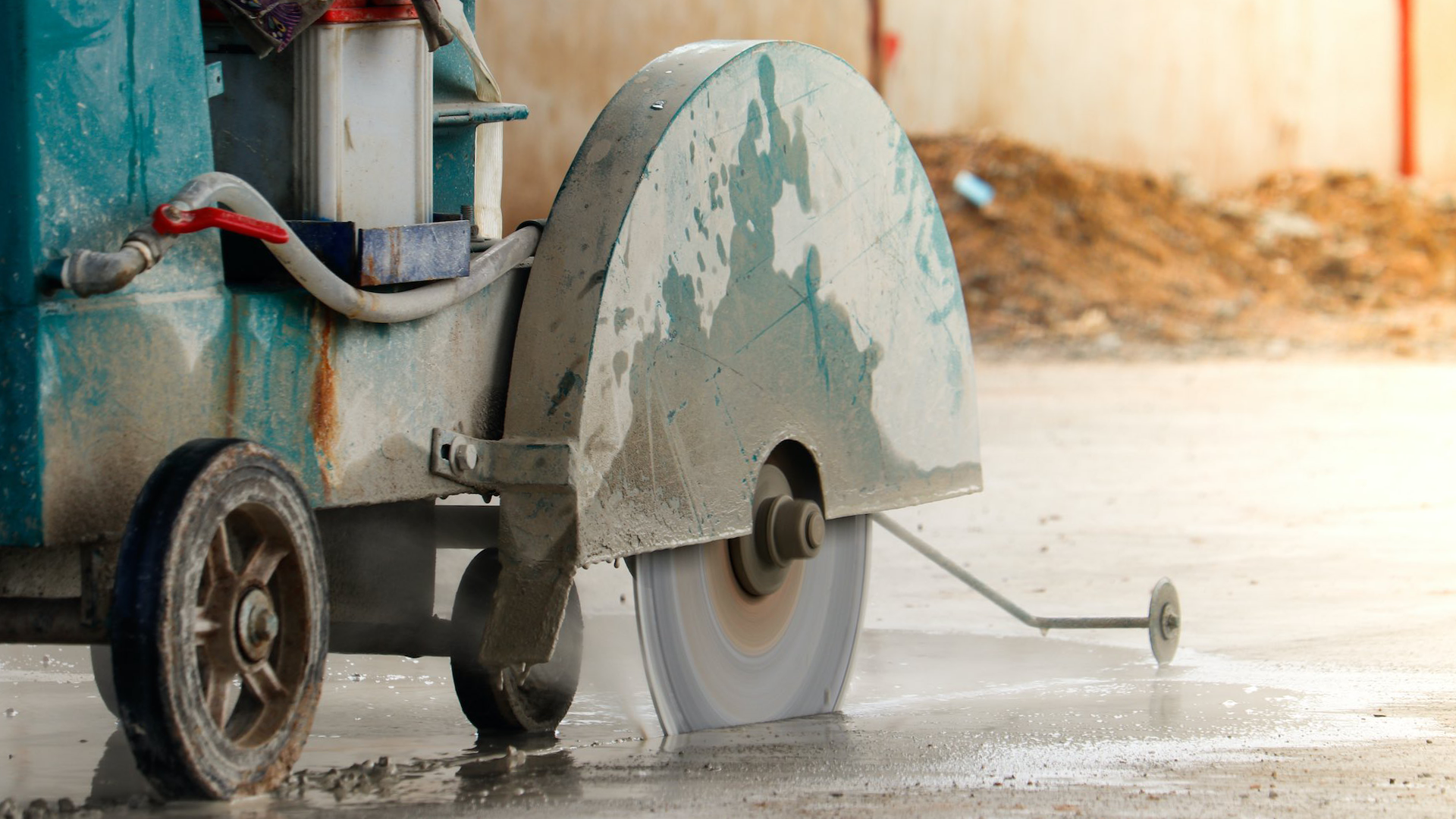
What Is the Best Diamond Blade for Cutting Concrete Floors?
For most concrete floor cutting applications, a segmented diamond blade is one of the most common choices.
Unlike conventional abrasive cutting discs, diamond blades use industrial diamond particles embedded in metal segments to grind and cut through hard mineral materials.
A professional concrete diamond blade should be selected according to:
- Concrete hardness
- Aggregate type
- Reinforced or non-reinforced concrete
- Blade diameter
- Saw horsepower
- Cutting depth
- Wet or dry cutting
- Required cutting speed
- Desired blade life
For reinforced concrete containing steel rebar, a laser-welded diamond blade for reinforced concrete is generally preferred for demanding professional applications.
Segmented Diamond Blade for Concrete
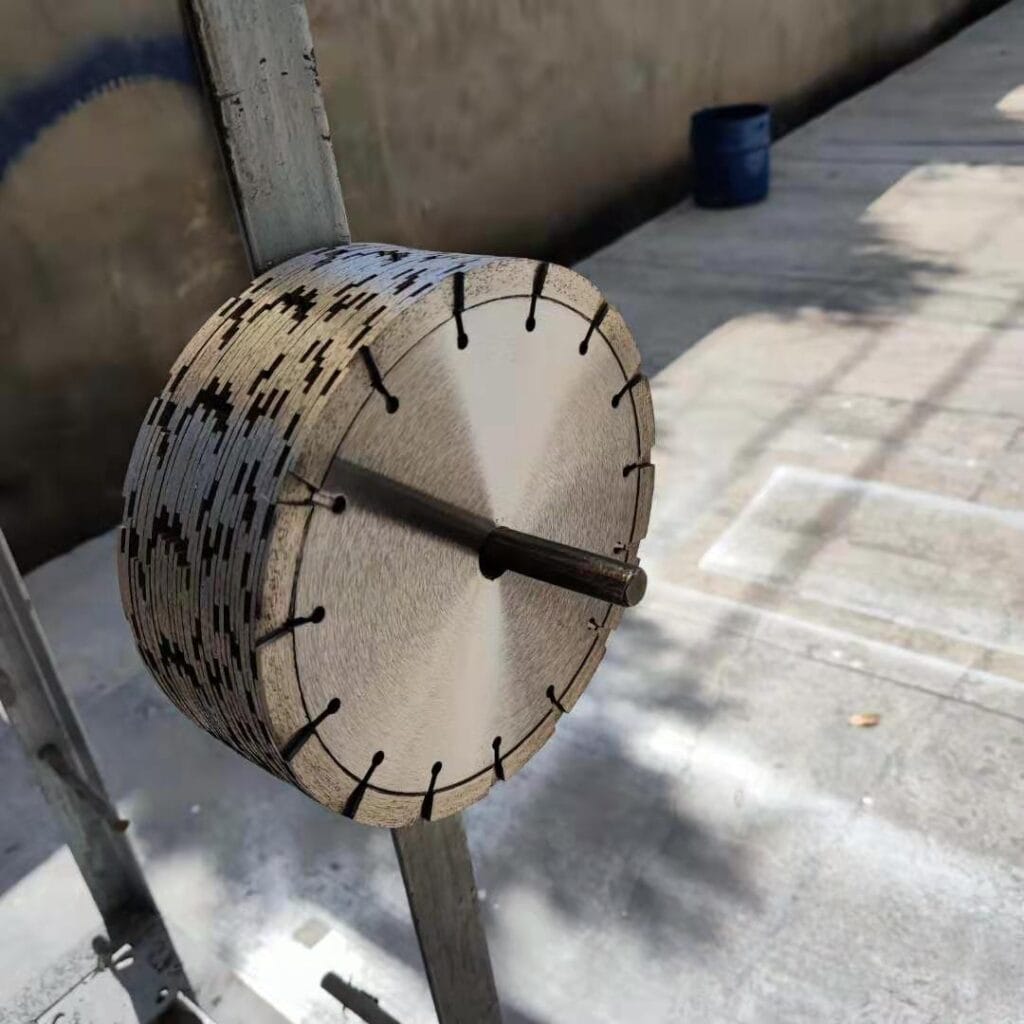
A segmented diamond blade for concrete uses separate diamond segments around the rim.
The gaps between the segments help:
- Remove concrete debris
- Improve airflow
- Reduce heat buildup
- Improve cutting speed
Segmented blades are widely used for:
- Concrete floors
- Concrete slabs
- Pavement
- Cured concrete
- Reinforced concrete
- General construction cutting
For contractors who prioritize fast cutting and durability, segmented blades are often a practical choice.
Turbo Diamond Blade for Concrete
A turbo diamond blade uses a continuous or semi-continuous rim with turbo-shaped grooves.
This design can provide a balance between cutting speed and edge quality.
Turbo blades are often used for:
- Concrete
- Masonry
- Brick
- Stone
- Smaller slab cutting jobs
Compared with an aggressive segmented blade, a turbo blade may provide a smoother cutting edge while still maintaining relatively fast cutting performance.
Laser-Welded Diamond Blade for Reinforced Concrete
When cutting reinforced concrete, the blade must handle both hard aggregate and embedded steel.
For heavy-duty applications, a laser-welded diamond saw blade for reinforced concrete provides a strong connection between the diamond segments and steel core.
Typical applications include:
- Reinforced concrete floors
- Structural slabs
- Concrete walls
- Road construction
- Demolition
- Infrastructure work
The actual cutting performance depends not only on welding technology but also on diamond concentration, segment bond, segment shape, steel core quality, and machine power.
How to Choose a Diamond Blade for Concrete Floor Cutting
Choosing the correct concrete saw blade is essential for achieving stable cutting performance and reasonable tool life.
1. Identify the Concrete Type
Not all concrete behaves the same.
Concrete may vary according to:
- Compressive strength
- Aggregate hardness
- Aggregate size
- Age
- Moisture
- Reinforcement level
Hard cured concrete usually requires a different diamond bond from soft or abrasive concrete.
As a general principle, harder materials often require a relatively softer bond so worn diamond particles can be released and fresh diamonds exposed.
More abrasive materials generally require a harder bond to reduce excessive segment wear.
2. Check Whether the Concrete Contains Rebar
If the floor or slab contains reinforcement, choose a diamond blade for reinforced concrete rather than a general-purpose masonry blade.
Rebar increases cutting resistance and heat generation.
A reinforced concrete blade typically uses a segment formulation designed to cut both:
- Concrete aggregate
- Steel reinforcement
Relevant product keywords include:
- reinforced concrete diamond blade
- diamond blade for concrete with rebar
- concrete saw blade for rebar
- laser welded concrete blade
3. Select the Correct Blade Diameter
Common diamond blade sizes for concrete cutting include:
- 7 inch
- 9 inch
- 10 inch
- 12 inch
- 14 inch
- 16 inch
- 18 inch
- 20 inch and larger
Smaller blades are commonly used on circular saws and handheld concrete saws.
Larger blades are normally used on:
- Cut-off saws
- Floor saws
- Walk-behind concrete saws
- Wall saws
Blade diameter affects cutting depth, RPM, machine power, and torque requirements.
4. Confirm the Arbor Size
The blade center hole must match the machine spindle.
Common arbor configurations vary according to the saw type and market.
Always confirm:
- Saw brand
- Machine model
- Blade diameter
- Arbor size
- Maximum RPM
before ordering a replacement diamond blade.
5. Choose Wet or Dry Cutting
Some concrete diamond blades are designed for wet cutting, some for dry cutting, and some for both.
Never assume every blade can be used under both conditions.
Segmented vs Turbo Diamond Blade for Concrete
Both segmented and turbo blades can cut concrete, but they serve slightly different priorities.
| Feature | Segmented Diamond Blade | Turbo Diamond Blade |
|---|---|---|
| Cutting Speed | High | High to medium |
| Cooling | Excellent | Good |
| Debris Removal | Excellent | Good |
| Edge Finish | More aggressive | Smoother |
| Concrete Floor Cutting | Excellent | Suitable |
| Reinforced Concrete | Excellent with correct specification | Application-dependent |
| Dry Cutting | Common | Common |
| Wet Cutting | Common | Common |
For deep or heavy-duty concrete floor cutting, segmented blades are often preferred.
For applications requiring a slightly cleaner edge, a turbo blade may be more suitable.
Wet vs Dry Cutting for Concrete Floors
Wet and dry concrete cutting both have advantages.
The correct method depends on the machine, blade, site conditions, and cutting depth.
Wet Cutting Concrete
Wet cutting uses water to cool the diamond blade during operation.
Advantages include:
- Reduced airborne dust
- Better blade cooling
- Improved debris removal
- More stable segment temperature
- Better performance during long cuts
- Longer blade life in many demanding applications
Wet cutting is especially useful for:
- Reinforced concrete
- Deep cuts
- Large diameter blades
- Long continuous cuts
- Professional floor sawing
The main disadvantage is the need to manage water and slurry.
Dry Cutting Concrete
Dry cutting does not use continuous water cooling.
It is commonly used when:
- Water is unavailable
- The job is small
- Indoor water control is difficult
- Portability is important
Dry concrete cutting generates more heat and dust, so the blade must be specifically designed for dry use.
During dry cutting:
- Avoid excessive pressure
- Make intermittent cuts when required
- Allow the blade to cool
- Use effective dust extraction
How to Cut a Concrete Floor with a Circular Saw
For shallow cuts in a concrete floor or slab, a circular saw with the correct diamond blade can be an effective solution.
Step 1: Check the Floor Before Cutting
Before making any cut, determine whether the floor may contain:
- Rebar
- Electrical cables
- Water pipes
- Heating pipes
- Post-tension cables
- Other embedded utilities
Do not cut blindly into structural concrete.
Step 2: Mark the Cutting Line
Use a chalk line, marker, or straightedge to clearly mark the required cut.
Accurate marking helps prevent unnecessary material removal.
Step 3: Install the Correct Diamond Blade
Select a circular saw blade for concrete that matches:
- Saw diameter
- Arbor size
- Maximum RPM
- Wet or dry use
- Concrete type
For reinforced concrete, use a blade specifically designed for concrete and rebar.
Step 4: Set a Shallow Initial Cutting Depth
Do not attempt to reach full cutting depth immediately.
Start with a shallow guide cut.
This helps:
- Keep the saw on line
- Reduce blade stress
- Improve cutting accuracy
Step 5: Make the First Guide Cut
Follow the marked line slowly and steadily.
Avoid twisting the blade or forcing the saw sideways.
Step 6: Increase Cutting Depth Gradually
For thicker concrete, make several passes.
Progressive cutting reduces machine load and helps maintain a straighter cut.
Step 7: Control Dust or Slurry
For dry cutting, use an appropriate dust extraction system.
For wet cutting, maintain sufficient water flow and manage the resulting slurry.
Step 8: Let the Diamond Blade Do the Cutting
Do not force the blade aggressively into the concrete.
Excessive feed pressure can:
- Increase heat
- Reduce blade life
- Cause blade deflection
- Overload the saw
- Increase segment wear
Use steady, controlled pressure instead.
How to Cut Reinforced Concrete Floors with Rebar
Cutting reinforced concrete is more demanding because the blade must pass through both concrete and steel.
A reinforced concrete diamond blade is specifically designed for this application.
When the blade reaches rebar, you may notice:
- Reduced cutting speed
- Increased machine load
- Increased heat
- Higher segment wear
This does not necessarily mean the blade is defective.
Use a Reinforced Concrete Blade
For frequent rebar cutting, choose a blade with:
- Reinforced-concrete-specific bond
- Strong segment attachment
- Appropriate diamond concentration
- Stable steel core
Laser-welded diamond blades are commonly used for demanding reinforced concrete cutting.
Maintain Stable Feed Pressure
Do not suddenly increase pressure when the blade reaches steel.
Allow the diamond segments to cut through the rebar gradually.
Use Adequate Cooling
Wet cutting is commonly preferred for heavy reinforced concrete cutting because it helps control segment temperature and remove cutting debris.
How Deep Can a Circular Saw Cut Concrete?
The maximum cutting depth depends on:
- Blade diameter
- Saw design
- Blade guard
- Arbor position
- Machine specification
The actual cutting depth is always less than the blade radius.
Approximate cutting capability may vary as follows:
| Blade Diameter | Typical Concrete Cutting Use |
|---|---|
| 7″ | Shallow floor and slab cutting |
| 9″ | Medium-depth handheld cutting |
| 12″ | General concrete and slab cutting |
| 14″ | Deeper handheld concrete cutting |
| 16″+ | Floor saw and heavy-duty applications |
Always check the machine manufacturer’s rated cutting depth rather than estimating cutting depth from blade diameter alone.
For deeper slabs, a dedicated concrete saw, floor saw, ring saw, or wall saw may be more appropriate.
Best Diamond Blade for Hard Concrete
Hard concrete can be difficult to cut because the aggregate and cured cement matrix resist abrasion.
For hard concrete, the blade needs to continuously expose fresh diamond particles.
A relatively softer bond is often selected for hard concrete because the bond must wear away at a controlled rate.
If the bond is too hard, the diamond segments may become glazed.
Common signs include:
- Cutting speed becomes slow
- Segments look smooth
- More pressure is required
- Blade generates excessive heat
In this case, the blade may need dressing or a different segment specification.
Best Diamond Blade for Soft or Abrasive Concrete
Soft concrete can be highly abrasive.
In this case, the metal bond can wear too quickly.
For softer or more abrasive concrete, a harder bond can help reduce premature segment loss.
Green concrete is a typical example of an abrasive cutting application.
For fresh or early-age concrete, use a green concrete diamond blade designed specifically for this material.
Common Concrete Floor Cutting Problems
Diamond Blade Is Not Cutting
If a diamond blade is not cutting concrete, possible causes include:
- Segment glazing
- Wrong blade specification
- Incorrect RPM
- Insufficient machine power
- Excessive pressure
- Poor cooling
A glazed blade may require dressing to expose fresh diamonds.
Diamond Blade Overheats
Overheating can result from:
- Insufficient water
- Continuous dry cutting
- Excessive feed pressure
- Incorrect RPM
- Poor debris removal
Reduce pressure and improve cooling before continuing.
Diamond Blade Wears Too Fast
Premature wear may indicate:
- Bond is too soft
- Concrete is highly abrasive
- Water flow is insufficient
- Machine speed is incorrect
- Blade specification is unsuitable
For abrasive materials, a harder bond may provide better blade life.
Concrete Cut Is Not Straight
Possible causes include:
- Blade deflection
- Saw misalignment
- Bent steel core
- Excessive feed speed
- Side pressure
- Poor guide control
Make a shallow guide cut before increasing the cutting depth.
Concrete Edge Chips
Chipping can occur when:
- The blade is too aggressive
- Feed speed is too high
- Blade is worn
- Saw vibrates
- Concrete surface is brittle
Reducing feed speed and using a more controlled blade design may improve edge quality.
Diamond Blade Gets Stuck
Blade binding can occur if:
- The cut closes around the blade
- Concrete shifts
- The saw moves sideways
- Cutting depth is increased too quickly
Stop the machine before attempting to release a trapped blade.
How Diamond Segment Design Affects Concrete Cutting
From a diamond blade supplier’s perspective, blade performance depends heavily on segment design.
Diamond Concentration
Diamond concentration affects:
- Cutting speed
- Wear rate
- Segment durability
More diamond does not automatically mean better performance.
The concentration must be matched with the bond and target material.
Bond Hardness
The metal bond controls how quickly worn diamond particles are released.
Correct bond selection is essential for:
- Hard concrete
- Soft concrete
- Reinforced concrete
- Green concrete
- Abrasive materials
Segment Height
Higher segments can provide more usable diamond material, but overall blade life still depends on the bond formula and cutting conditions.
Segment Shape
Common concrete blade segment designs include:
- Standard segments
- Turbo segments
- Drop segments
- Protection segments
- Other customized geometries
Segment shape can affect:
- Cutting speed
- Cooling
- Slurry removal
- Undercut protection
- Starting performance
How to Choose a Concrete Diamond Blade Supplier
For distributors, contractors, and tool brands, a concrete diamond blade should be selected based on more than price.
Important factors include:
Target Material Experience
The supplier should understand the difference between blades for:
- Cured concrete
- Reinforced concrete
- Green concrete
- Asphalt
- Masonry
Segment Formula
The segment bond should be adjustable according to:
- Concrete hardness
- Aggregate
- Rebar content
- Saw power
- Wet or dry cutting
Welding Quality
For demanding concrete applications, laser welding is commonly used to provide strong segment attachment.
Steel Core Quality
The steel core affects:
- Blade stability
- Tension
- Runout
- Cutting accuracy
Size Range
A professional supplier should provide multiple diameters and arbor options for different machines.
OEM Capability
For distributors and private-label brands, customization may include:
- Blade diameter
- Arbor size
- Segment size
- Segment height
- Diamond bond
- Blade color
- Logo
- Laser marking
- Packaging
OEM and Wholesale Diamond Blades for Concrete
Johnson Tools manufactures and supplies diamond saw blades for concrete, reinforced concrete, green concrete, asphalt, masonry, and construction applications.
Our concrete cutting blade range can support:
- Handheld circular saws
- Cut-off saws
- Walk-behind saws
- Floor saws
- Wall saws
OEM and wholesale options may include:
- Custom blade diameter
- Custom arbor
- Custom segment dimensions
- Different bond formulations
- Wet cutting blades
- Dry cutting blades
- Reinforced concrete blades
- Laser-welded segments
- Private-label logo
- Custom packaging
For an accurate blade recommendation, professional buyers should provide:
- Saw model
- Blade diameter
- Arbor size
- Target material
- Concrete hardness
- Reinforcement level
- Wet or dry cutting
- Required cutting depth
- Order quantity
This information helps match the diamond blade specification to the actual cutting application.
Frequently Asked Questions
What is the best blade for cutting a concrete floor?
A segmented diamond blade is commonly used for concrete floor cutting because it provides good cutting speed, cooling, and debris removal.
For reinforced concrete, use a blade specifically designed for concrete and rebar.
Can I cut concrete with a circular saw?
Yes. A circular saw fitted with the correct diamond blade can be used for shallow concrete cuts.
For deep or heavy-duty cutting, a dedicated concrete saw or floor saw is generally more suitable.
What blade should I use to cut reinforced concrete?
Use a diamond blade for reinforced concrete with a segment bond designed to handle both concrete aggregate and steel reinforcement.
Laser-welded blades are commonly used for demanding professional applications.
Should I cut concrete wet or dry?
Wet cutting provides better cooling and dust control and is commonly used for long, deep, or demanding cuts.
Dry cutting is convenient for smaller jobs but requires a blade specifically rated for dry use and effective dust control.
Can a diamond blade cut through rebar?
Yes. A reinforced-concrete-specific diamond blade can cut through embedded steel reinforcement.
Cutting speed will generally decrease when the blade reaches rebar.
Why is my diamond blade not cutting concrete?
The blade may be glazed, incorrectly matched to the concrete, operated at the wrong RPM, insufficiently cooled, or already worn.
What type of diamond blade is best for hard concrete?
Hard concrete generally requires a blade with a bond designed to expose fresh diamonds at the correct rate. A relatively softer bond is commonly used for very hard materials.
How can I make a concrete diamond blade last longer?
Use the correct blade specification, maintain proper RPM, avoid excessive feed pressure, use adequate cooling, and match the bond to the concrete hardness and abrasiveness.
What size diamond blade do I need for a concrete floor?
The correct size depends on the saw and required cutting depth. Always use a blade diameter approved by the saw manufacturer.
Can Johnson Tools customize concrete diamond blades?
Yes. OEM and wholesale specifications can be customized according to blade diameter, arbor, segment dimensions, bond formulation, target material, wet or dry cutting conditions, branding, and packaging.
Conclusion
Effective concrete floor cutting starts with the correct diamond saw blade for concrete.
For general floor and slab cutting, segmented diamond blades provide fast cutting and efficient debris removal. Turbo blades can provide a balance between speed and edge quality, while reinforced concrete requires a blade specifically designed to handle embedded steel.
The correct blade should always be selected according to the concrete hardness, aggregate, reinforcement level, machine power, blade diameter, cutting depth, and wet or dry cutting method.
For contractors and professional users, proper blade selection can improve cutting speed, reduce overheating, extend segment life, and lower overall cutting cost.
Johnson Tools supplies OEM and wholesale concrete cutting diamond blades, reinforced concrete blades, laser-welded saw blades, wet cutting blades, and dry cutting blades for professional construction applications.
Top Professional Recommendations from Johnson Tools
To maximize your efficiency on the job site, we recommend the following industrial-grade tools:

1. 4.5″ Flush Cut Diamond Tile Saw Blade (with Flange)
Best For: Trimming cement board corners and flush cutting protruding edges.
Advantage: This diamond tile saw blade features an integrated flange for stability and is widely considered the best tile saw blade for porcelain and stone, offering unmatched precision for cement board finishing.

2. Laser Welded Diamond Core Bits (OD25-700mm)
Best For: Drilling holes for pipes and electrical outlets through cement board and backing walls.
Advantage: Our diamond core bits are laser-welded for maximum safety. This core drill bit for concrete can easily penetrate the cement board and the structural concrete behind it in one go.
3. Premium Segmented Concrete Saw Blades
Best For: Long-distance straight cuts in heavy-duty fiber cement siding.
Advantage: These concrete saw blades are designed for high-speed operation and heat dissipation, outlasting standard blades by a factor of 50.