Skip to main content Skip to footer

Introduction
Concrete cutting is one of the most common tasks in construction and renovation. Contractors rely on saw blades and drills to open slabs, walls, or pavements for plumbing, electrical, HVAC, or structural work. The two main methods are wet cutting and dry cutting. Each has clear strengths, and the best choice depends on your site, budget, and safety requirements.
This guide explains both methods, shares real-world contractor scenarios, and provides a clear comparison. Along the way, we’ll highlight where Johnson Tools products give you the edge in performance and durability.
For professional concrete contractors, choosing between wet and dry cutting is rarely a matter of personal preference. It is a critical operational decision dictated by job site conditions, strict environmental regulations, and the specific materials being cut.
Making the wrong choice doesn’t just result in premature tool wear; it can lead to catastrophic blade failure, ruined concrete slabs, and massive fines for violating silica dust emission standards. To maximize your efficiency and stay compliant, you must understand the technical differences behind wet vs. dry diamond blades and exactly when to deploy each method on the job site.
Wet Cutting: Cleaner and Longer Lasting
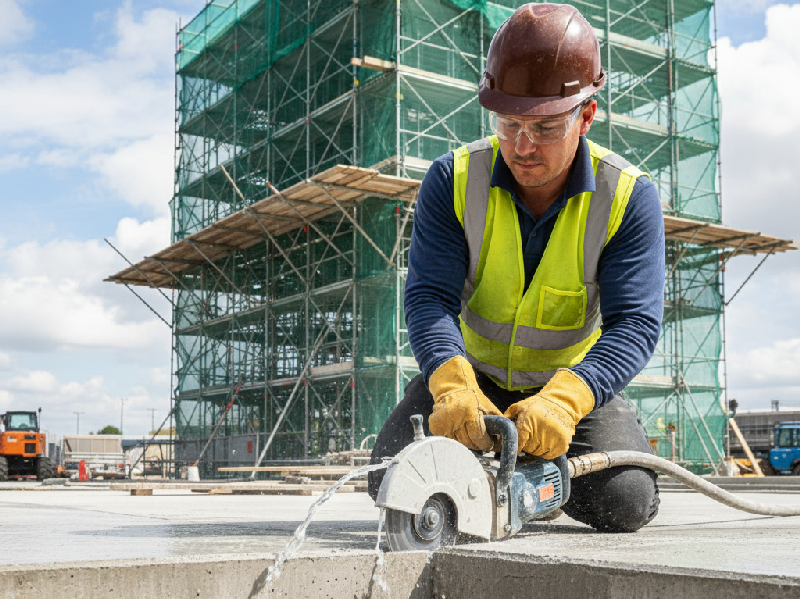
Wet cutting uses diamond blades with water cooling. The water keeps the blade cool and traps dust. It’s often the go-to choice for thick slabs, reinforced concrete, or precision projects.
When cutting cured concrete, heavily reinforced concrete, or masonry, the friction generates immense heat and vast amounts of crystalline silica dust. Wet cutting is the gold standard for heavy civil engineering and indoor demolition because it solves both problems simultaneously.
A continuous stream of water acts as a coolant, preventing the steel core of the diamond saw blades from warping under high RPMs. More importantly, water suppresses up to 95% of airborne silica dust, instantly turning it into a manageable slurry. This ensures strict compliance with occupational safety regulations, protecting your crew from hazardous respiratory conditions.
Advantages
- Dust control: Water traps silica particles, improving air quality and reducing health risks. It also keeps job sites cleaner.
- Cooler blades: Water prevents overheating, which extends blade life and keeps cutting speed consistent.
- Smooth finish: Wet cuts are more accurate with less chipping, perfect for projects that demand precision.
Disadvantages
- Water supply needed: You need hoses or tanks, which increases setup.
- Slurry cleanup: Wet cutting creates a slurry (muddy residue) that must be collected and disposed of properly.
- Bulkier gear: Wet saws can be larger and less mobile than dry saws.
Dry Cutting: Fast and Convenient
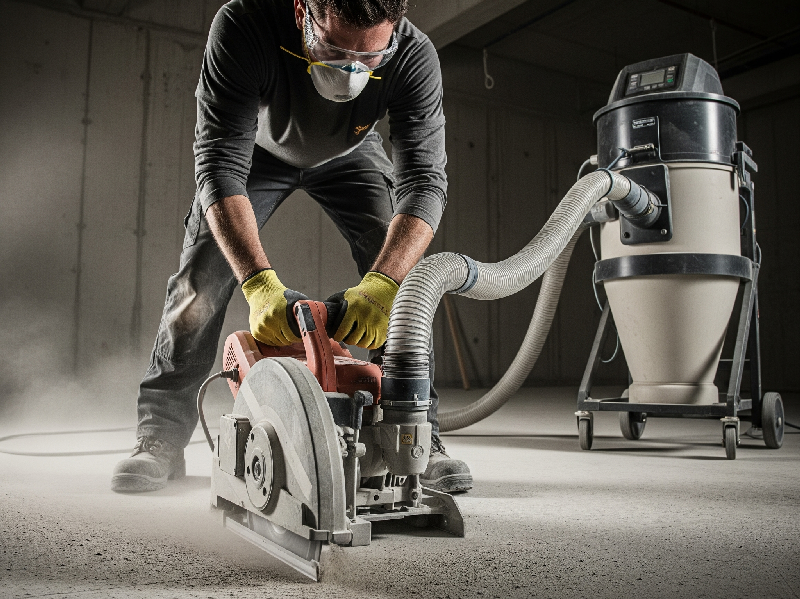
Dry cutting uses diamond blades without water. It’s popular for smaller jobs or in places where water is not practical.
While wet cutting is safer for the lungs and the blade, it is not always practical. Water setups are time-consuming, and the resulting slurry can cause unacceptable damage in finished indoor environments. This is where dry cutting becomes essential.
Dry cutting is highly preferred for outdoor tasks like scoring expansion joints in green concrete, quick masonry repairs, and shallow decorative cuts. However, dry cutting requires specialized laser-welded dry cutting discs. Because there is no water to cool the blade, these discs rely on ambient airflow and specialized segment geometries (like U-slots or turbo rims) to dissipate heat and clear debris rapidly. To remain OSHA-compliant during dry cuts, contractors must equip their saws with industrial HEPA-filtered vacuum extraction systems.
Advantages
- No water needed: Saves time, no hoses or slurry management.
- Portability: Dry saws are often lighter, making them easier to transport and set up.
- Quick for small jobs: Ideal for shallow cuts, indoor repairs, or short-duration projects.
Disadvantages
- Dust hazard: Dry cutting produces large amounts of fine silica dust, which requires vacuums and masks to manage.
- Blade wear: Without water cooling, blades heat up faster and wear more quickly.
- Noise: Dry cutting is louder, especially in enclosed spaces.
Real-World Contractor Scenarios
- Wet Cutting Case: During a hospital renovation, contractors used wet blades to open reinforced walls. Dust was almost completely suppressed, keeping patient areas clean. Cuts were smooth, preventing costly rework.
- Dry Cutting Case: On a sidewalk repair, no water was available. Workers used portable dry saws to make shallow cuts quickly, saving hours of setup and still finishing on time.
Cost and Efficiency Considerations
Use this guide to match the right method and tool to your specific job site requirements:
| Cutting Method | Ideal Application Scenarios | Required Blade Technology | Dust Control Method |
| Wet Cutting | Deep cuts, heavily reinforced concrete, indoor trenches. | High-frequency / Laser Welded Wet Diamond Blades with Hard Bonds. | Continuous water stream (slurry management). |
| Dry Cutting | Outdoor shallow cuts, masonry repair, green concrete expansion joints. | Heat-resistant, Laser Welded Dry Cutting Discs with Soft Bonds. | Vacuum extraction with HEPA filtration. |
Contractors often ask: Which method saves more money? The answer depends on job size and frequency.
- Wet cutting requires more setup and slurry disposal, but it significantly extends blade life and prevents overheating. For heavy use or large projects, this often reduces overall costs.
- Dry cutting is cheaper and faster for small jobs, but causes blades to wear faster. Over time, frequent blade replacement increases expenses.
One of the most expensive mistakes a contractor can make is using the wrong blade for the cutting environment. The secret lies in the metal matrix (the bond) that holds the diamond grit.
- Wet Diamond Blades (Hard Bond): Water not only cools the blade but also washes away the abrasive concrete paste. Because the paste is removed, a wet blade requires a harder metal bond to hold onto the diamonds longer. If you use a wet blade for dry cutting, the lack of water will cause the blade to overheat, the steel core to warp, and the segments to “glaze” over (turning blunt and useless).
- Dry Diamond Blades (Soft Bond): Dry blades use a softer metal bond. As you cut, the bond wears away quickly to constantly expose fresh, sharp diamonds. While many high-quality dry blades can be used with water to extend their life, you should never use a dedicated wet blade for dry cutting.
Safety and Regulations
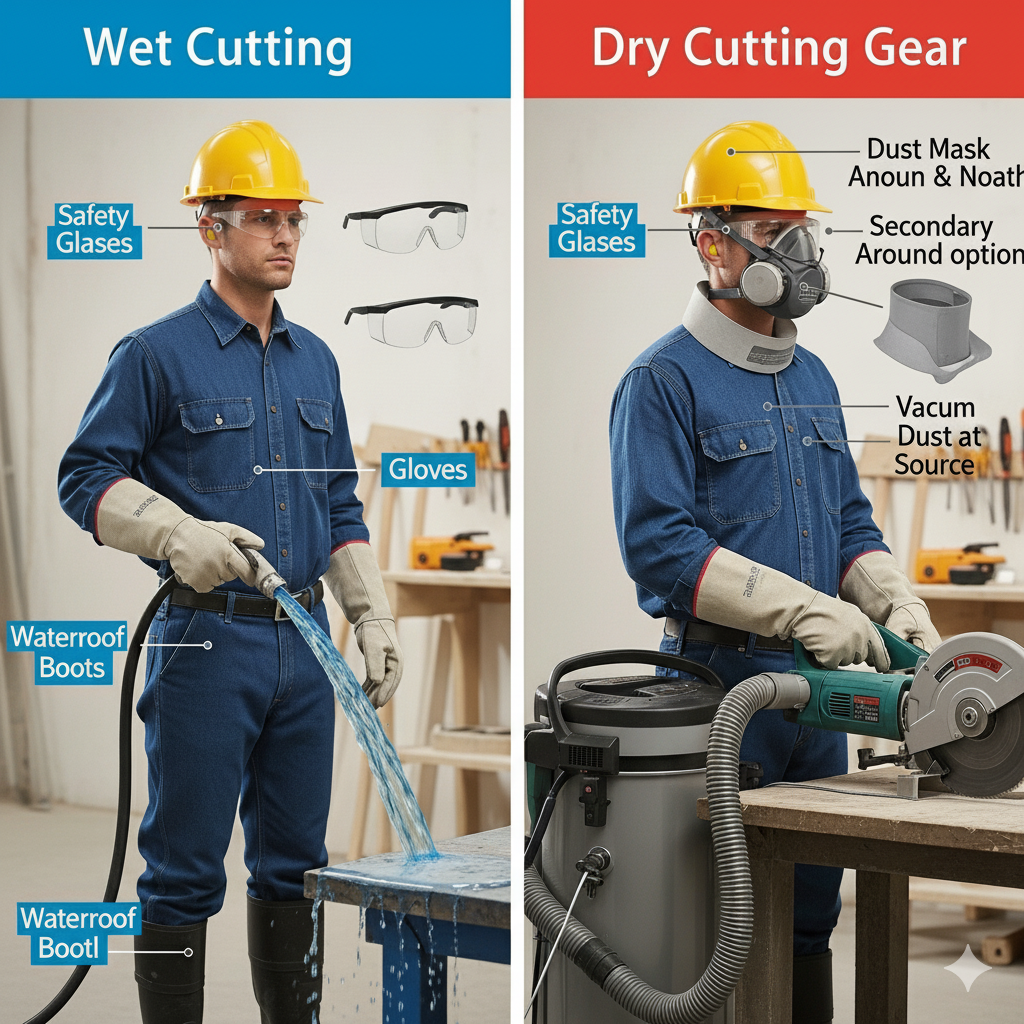
Modern construction demands compliance with strict dust control standards.
- Wet cutting is the safest method for silica dust suppression and aligns with OSHA and EU workplace safety regulations.
- Dry cutting is acceptable but requires additional measures: industrial vacuums, respirators, and protective eyewear. Without these, crews risk health fines or violations.
Pros & Cons Comparison Table
| Cutting Method | Advantages | Disadvantages |
|---|---|---|
| Wet Cutting | – Excellent dust control – Cools blade for longer life – Smooth and precise cuts | – Needs constant water – Slurry disposal – Bulkier setup |
| Dry Cutting | – Portable & fast – No water setup – Great for small jobs | – Heavy dust – Faster blade wear – Noisy indoors |
Johnson Tools Advantage
At Johnson Tools, we design and manufacture diamond saw blades for both wet and dry cutting. Our blades feature:
- Laser-welded segments for strength and durability.
- Optimized diamond bonds to resist overheating and glazing.
- Options for concrete, asphalt, masonry, and tile applications.
Whether you need blades for high-precision wet cutting or fast, portable dry cutting, Johnson Tools provides tested products trusted by contractors worldwide.
👉 Explore the full product range on our homepage. For custom solutions or advice, reach out via our contact page.
Conclusion
Both wet cutting and dry cutting are essential in modern construction. Wet cutting ensures precision and dust control on large projects, while dry cutting offers speed and convenience for smaller tasks. The smart contractor keeps both options ready.
By choosing Johnson Tools diamond blades, you get efficiency, compliance, and durability—helping your team cut smarter, safer, and faster.
FAQ: Wet vs Dry Concrete Cutting
Q1: What happens if I dry cut with a wet diamond blade?
A: Extreme heat buildup will occur within seconds. The high-tension steel core will likely turn blue and warp, leading to violent vibrations. In severe cases, the heat will melt the segment weld, causing teeth to fly off, which is a massive safety hazard.
Q2: Are there blades that can do both wet and dry cutting?
A: Yes. Premium laser-welded diamond blades are often rated for both wet and dry use. However, for maximum lifespan and safety, especially when cutting through thick steel rebar, adding water is always recommended even if the blade is dry-rated.
Q3: How do I cut expansion joints without water?
A: For fresh pours, use specialized early-entry concrete saw blades. These are designed specifically for dry cutting “green” concrete within the first 1-2 hours of finishing, utilizing an anti-spalling skid plate to prevent random cracking without the need for a water supply.
Equip Your Crew with Johnson Tools Diamond Blades
Whether you are trenching through reinforced concrete with a 60hp walk-behind saw or performing precise dry cuts on masonry, your tools must be able to handle the heat.
At Johnson Tools, we manufacture industrial-grade diamond cutting solutions designed to outlast the competition. All our premium concrete saw blades are rigorously tested and certified to EN 13236:2019 safety standards, ensuring that our laser-welded segments stay securely attached, wet or dry.
Upgrade your cutting efficiency today. We specialize in OEM/ODM manufacturing for global distributors. Contact the Johnson Tools engineering team to secure testing samples, get expert technical support, and access our highly competitive wholesale pricing for your fleet.