Skip to main content Skip to footer
Introduction
Angle grinders are a fantastic tool for smaller concrete cutting and grinding tasks. They are compact, easy to handle, and can cut through concrete with the right blade. In this guide, we’ll go over everything you need to know about using an angle grinder for concrete work.
You’ll learn what tools and blades are best for the job, how to use them step-by-step, and how to stay safe while cutting or grinding concrete.
Can You Cut Concrete with an Angle Grinder?
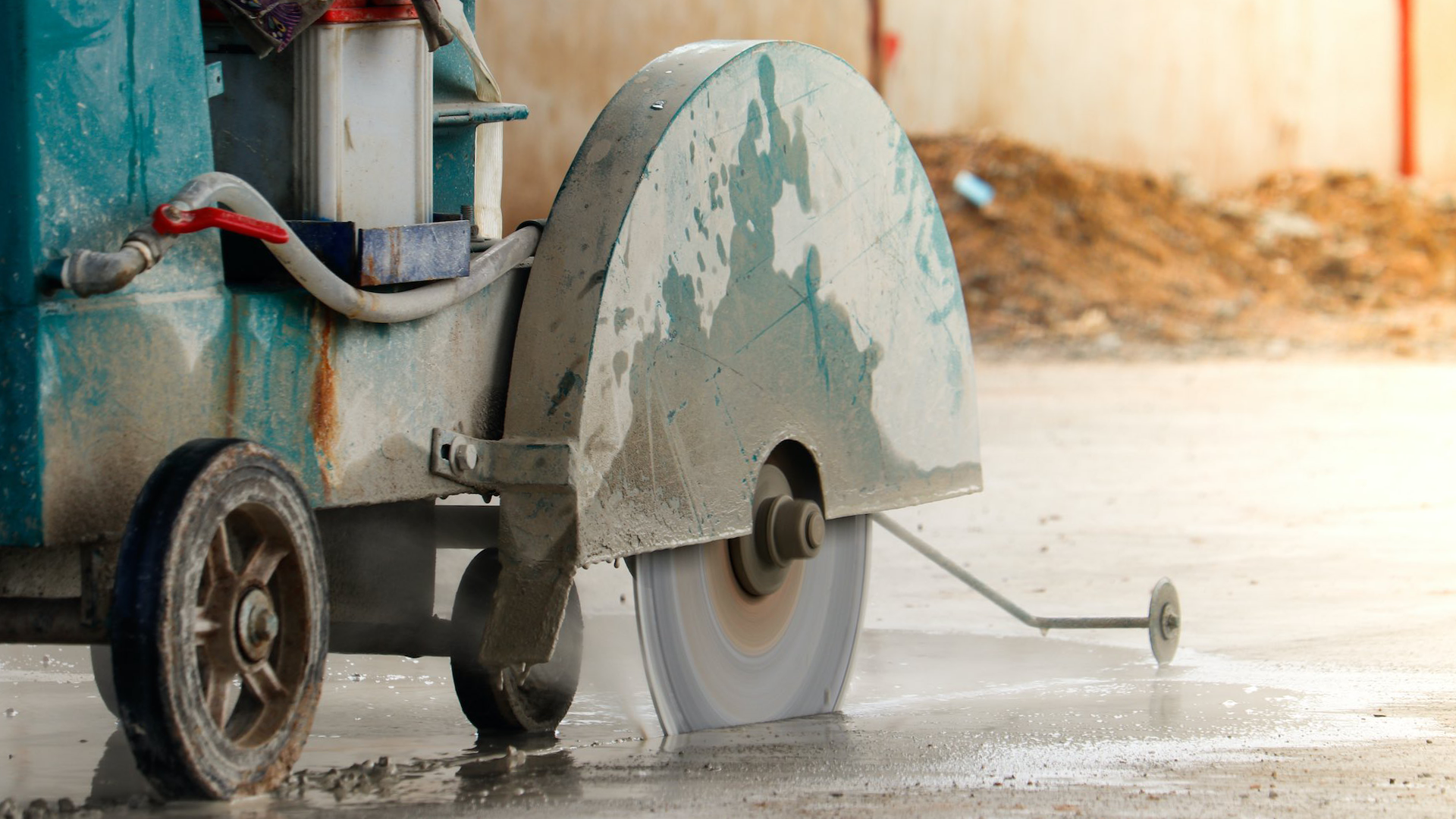
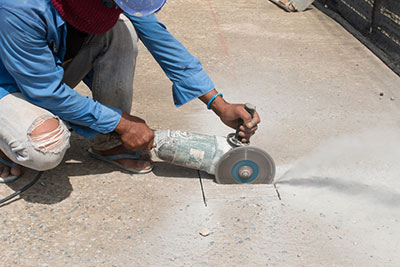
Yes, you can! Angle grinders are perfect for smaller cuts, surface prep, and detailed work on concrete. However, they aren’t made for deep or heavy-duty cutting. If you need to make deep cuts or work with large, thick slabs, you’ll want a cut-off saw or a core drill instead. These tools are designed for cutting through thick concrete more efficiently.
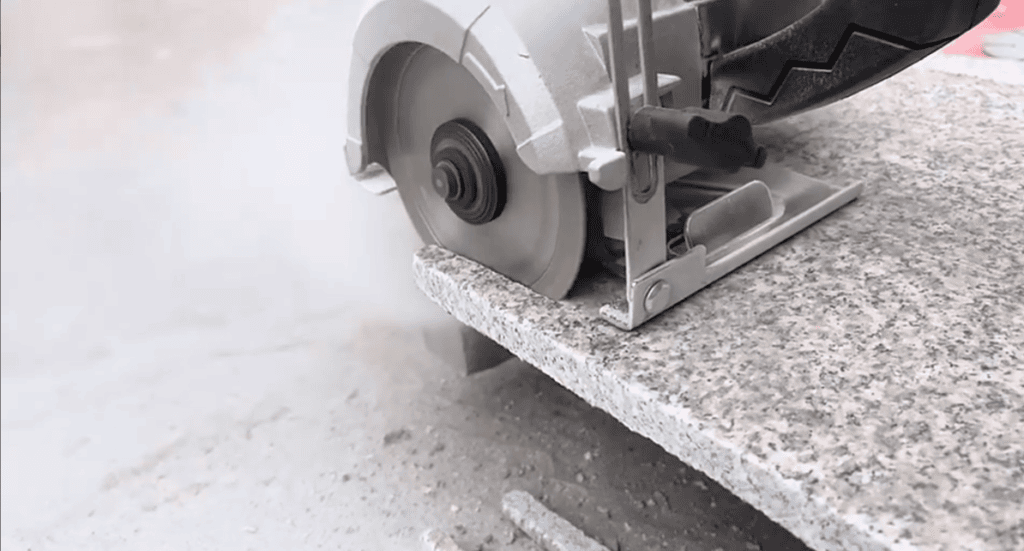
But for smaller projects, like smoothing seams, cutting pavers or cement tiles, shaping the edges of slabs, or doing some light grinding to remove high spots or rough areas, the angle grinder is ideal. It’s great for fine detail work where you don’t need to make a big cut, but you still need precision and control.
What Type of Blade for Cutting Concrete with a Grinder?
When cutting concrete with an angle grinder, the right blade is key. Different blades work better for different jobs, so choosing the right one will make your cutting process smoother and more efficient.

- Segmented Diamond Blades (For Speed) Best for fast, rough cutting of cured concrete and pavers. Our [Laser-Welded Segmented Series] features deep gullets to remove dust quickly and prevent overheating.
- Turbo Rim Blades (For Speed & Smoothness) The serrated edge cuts faster than a continuous rim but smoother than a segmented blade. Johnson Tools’ [Hot-Pressed Turbo Blades] are the contractor’s choice for general masonry work.
- Diamond Cup Wheels (For Grinding) Don’t use a cutting blade to grind! Use our [Double Row Diamond Cup Wheel] for aggressive material removal or surface leveling.
When using an angle grinder to cut concrete, remember to use segment or turbo blades for the cutting itself, and choose cup wheels or diamond plates when you need to grind or smooth the surface. The right blade makes a huge difference in how easy and clean the cut will be, so pick one that suits your job best!
Best Angle Grinders for Concrete Work
When you’re ready to start cutting concrete, the angle grinder you choose can make a big difference in how easy and smooth your job goes. There are a few great models to consider, each with different features that help in concrete work.

Recommended Blades & Wheels for Your Grinder Size
To get the best performance out of your angle grinder, pairing it with the right diamond tool is more important than the machine brand itself. Here is how to equip your tools with Johnson Tools professional consumables:
For 7-Inch Grinders (Heavy-Duty Grinding) When using a powerful 7-inch grinder for large concrete surfaces, you need a wheel that can handle high torque. The Johnson Tools Double-Row Diamond Cup Wheel is perfect for these heavy grinding tasks. It removes material aggressively and levels uneven concrete spots faster than standard abrasive wheels.
For 4.5-Inch Grinders (Precision Cutting) If you are using a compact 4.5-inch grinder for detail work, the Johnson Tools Segmented Diamond Blade is the ideal choice. It is lightweight, dissipates heat quickly, and allows for fast, precise cuts on pavers and cement boards without overloading your tool.
For Smooth & Chip-Free Finishes. If your goal is a consistent cut with minimal vibration, equip your grinder with our Hot-Pressed Turbo Rim Blade. The continuous serrated rim design ensures smooth operation and a clean edge, making it perfect for visible cuts where finish quality matters.
Tip: For surface grinding/leveling, always use a 7” Cup Wheel for stability; for cutting slabs or pavers, a 4.5” to 5” Diamond Blade offers the best control. Choosing the correct Johnson Tools consumables ensures your project is done efficiently and safely.
How to Cut Concrete with an Angle Grinder (Step-by-Step)
Now that you have your angle grinder, it’s time to get started on cutting concrete. Here’s a simple, step-by-step guide to help you through the process:
Step 1: Prep Your Work Area
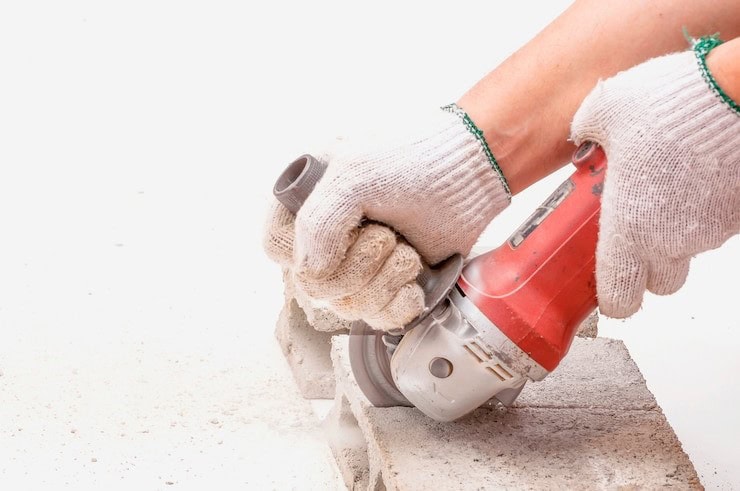
Start by clearing your work area of dust, debris, and any obstacles that could get in your way while you’re working. Once the area is clear, mark your cut line with chalk or a marker. This will help guide your grinder and ensure a precise cut. If you aren’t using a wet cutting method, wetting the surface can help minimize dust and make the cutting process smoother.
Step 2: Attach the Right Diamond Blade
Next, you’ll want to attach the right diamond blade. Be sure to use a blade that’s rated for concrete or masonry. Check the RPM of the grinder and make sure it matches the RPM rating of your blade. This is important for safe and efficient cutting. Once you’ve selected the right blade, use the wrench that comes with your grinder to tighten it securely.
Step 3: Safety First
Before you begin cutting, it’s important to prioritize safety. Make sure to wear safety goggles or a face shield to protect your eyes from flying debris. Use a dust mask or respirator to keep harmful concrete dust out of your lungs. Hearing protection is also essential since angle grinders can be loud, and if you’re using a walk-behind concrete saw, the noise can be even more intense.
Wear gloves to protect your hands, and don’t forget your steel-toe boots for foot protection. If you’re working indoors, using a dust shroud and a vacuum can help keep your workspace clean and minimize the dust in the air.
Step 4: Make the Cut
Now that you’re ready to cut, turn on the grinder and let it reach full speed before you touch it to the concrete. Gently lower the grinder onto the surface, and apply steady pressure as you move along your marked cut line. Don’t force the blade—let it do the work. If you need to make deep cuts, it’s better to do it in several shallow passes instead of trying to cut too deep in one go. This will help prevent overheating and extend the life of your blade.
Step 5: Clean Up
Once you’ve finished the cut, it’s important to clean up. Use a vacuum to remove concrete dust or rinse the area if you were using a wet cutting method. After the area is clean, inspect the blade for any signs of wear or segment loss. Keeping your tools in good condition will ensure that they work effectively on your next project.
Do you want to learn more? Explore our guides at Johnson Tools and learn the best tips!
Grinding vs. Cutting: What’s the Difference?
When using an angle grinder for concrete work, it’s important to know the difference between cutting and grinding. These two tasks may seem similar, but they require different tools and techniques.

Cutting Concrete
Cutting concrete is when you need to slice through slabs, pavers, or cement blocks. To do this, you’ll want to use a diamond cutting blade. The diamond blade is made to cut through tough materials like concrete with ease. It’s perfect for making straight, clean cuts, whether you’re cutting through a concrete slab or shaping a paver.
Grinding Concrete
On the other hand, grinding concrete is all about smoothing or leveling the surface. For this, you should use a diamond grinding cup. The grinding cup helps you smooth out rough spots or remove small layers of concrete to make the surface flat and even. Unlike cutting, grinding is more about smoothing things down rather than slicing through.
So, when you need to cut, use a cutting blade; when you need to smooth or level the surface, use a grinding wheel.
Common Mistakes to Avoid
Now that we’ve covered the basics of cutting and grinding, let’s talk about some common mistakes people make when using an angle grinder on concrete and how to avoid them.
Using the Wrong Blade
One mistake is using the wrong blade. Make sure to always use concrete-rated diamond blades when cutting concrete. Regular blades just won’t hold up, and they might not work properly. Always choose the correct blade to get the best results.
Cutting Too Deep in One Pass
Another mistake is cutting too deep in one pass. Cutting concrete can be tough, and it’s easy to want to get it done quickly, but this can cause problems. When you try to cut too deep all at once, the blade can overheat, and you might even get some kickback, which can be dangerous. To avoid this, make your cuts in smaller, shallower steps. This way, you’ll get cleaner results, and your blade will last longer.
No Dust Control
A big problem people run into is not controlling the dust. Concrete dust can be harmful to your lungs, so it’s really important to use dust control. If you’re cutting dry, always wear a dust mask. If you can, use a vacuum or wet cutting method to keep the dust down. This will help you stay safe and keep the air clean while you work.
Skipping Safety Gear
Finally, one of the biggest mistakes is skipping safety gear. Grinder mishaps can cause serious injuries, so always make sure you’re wearing the right safety gear. Safety goggles or a face shield will protect your eyes, and gloves will keep your hands safe. Don’t forget steel-toe boots to protect your feet. Taking these simple safety steps can make a big difference in keeping you safe while working with concrete.
By avoiding these mistakes, you’ll be able to work with your angle grinder more safely and effectively, making cleaner cuts and getting better results every time.
Recommended Tools & Blades
When you’re ready to start cutting and grinding concrete, it’s important to choose the right tools and blades for the job. Having the best gear will make your work easier, safer, and more efficient..

Angle Grinders & Attachments To get the best performance from your 7-inch angle grinder on heavy jobs, equip it with Johnson Tools’ Heavy-Duty Diamond Wheels. They are designed to handle high torque for larger, tougher concrete surfaces. If you are using a smaller, compact 4.5-inch grinder, our Standard Series Diamond Blades are the perfect choice. They are powerful and perfect for cutting concrete and detailed grinding jobs, ensuring you achieve clean and smooth cuts with maximum control.
Diamond Blades When it comes to diamond blades, the Johnson Tools Turbo Rim and the Johnson Tools Segmented Blade are both excellent options. These blades are engineered for fast and efficient cutting of concrete, giving you clean results with less effort and a longer lifespan.
Grinding Cup For grinding, the Johnson Tools Double-Row Diamond Cup Wheel is highly recommended. It’s perfect for smoothing or leveling rough concrete surfaces and prepping them for finishing, removing material much faster than standard abrasives.
Dust Control To keep your workspace clean and free of dust, the Johnson Tools Universal Dust Shroud is a great tool. It helps control the concrete dust while you work, especially if you’re cutting or grinding indoors. This will protect your health and keep your area safer.
Need Expert Advice? Johnson Tools are always here to help you with the best advice!
FAQs
Now, let’s go over some frequently asked questions about using angle grinders for concrete work.
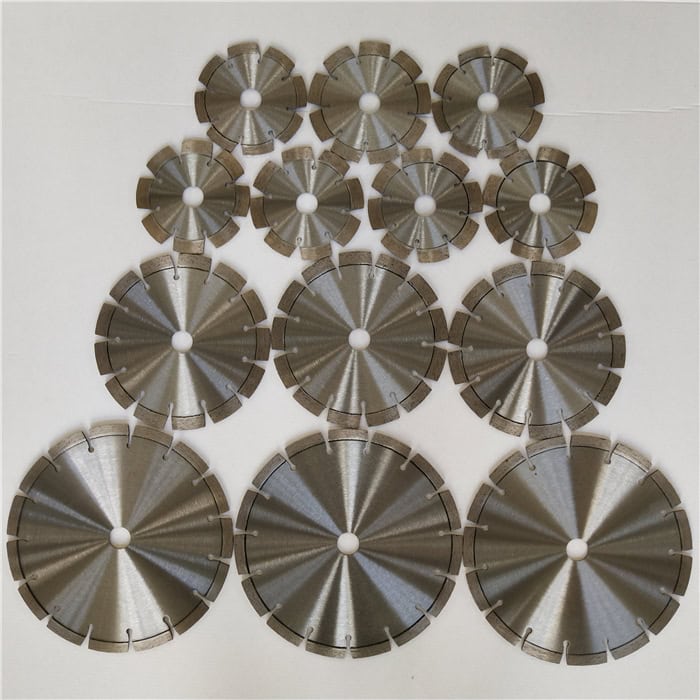
Q1: What is the lifespan of your 4.5″ diamond blades?
A: Lifespan varies by aggregate hardness, but our Premium Grade Segmented Blades typically cut 400-600 linear feet in standard cured concrete. We offer different bond matrices (Soft, Medium, Hard) to match your local stone hardness.
Q2: Do you offer bulk packaging for hardware stores?
A: Yes. We provide 10-pack and 50-pack bulk boxes for retailers, as well as skin-card packaging for hanging displays. OEM branding is available for orders over 500 units.
Q3: Can your blades cut reinforced concrete (with rebar)?
A: Standard concrete blades may struggle with rebar. For reinforced concrete, we recommend our [Turbo-Segmented Laser Welded Blades], designed to cut through steel reinforcement without losing segments.
Q4: What is the difference between Sintered and Laser Welded blades?
A: Sintered blades are cost-effective for DIY use. Laser-welded blades (which we specialize in) are much stronger and safer for high-heat professional applications, as the segments won’t detach even under extreme stress.
Conclusion: Cut & Grind Concrete the Smart Way
When you’re cutting or grinding concrete, always use the right grinder, blade, and safety gear. Don’t rush through the process—take your time and make sure you’re using the best tools for the job. It’s also a good idea to stick to shallow passes when cutting, so you don’t overwork the blade and cause unnecessary wear.
Investing in concrete-rated diamond blades will help you get clean, fast results every time. The right tools make all the difference, so make sure to pick the best angle grinder and diamond blade for your needs.
If you’re ready to tackle your next concrete project, now’s the time to get started.
Shop the best diamond blades and angle grinders for concrete cutting today at Johnson Tools!